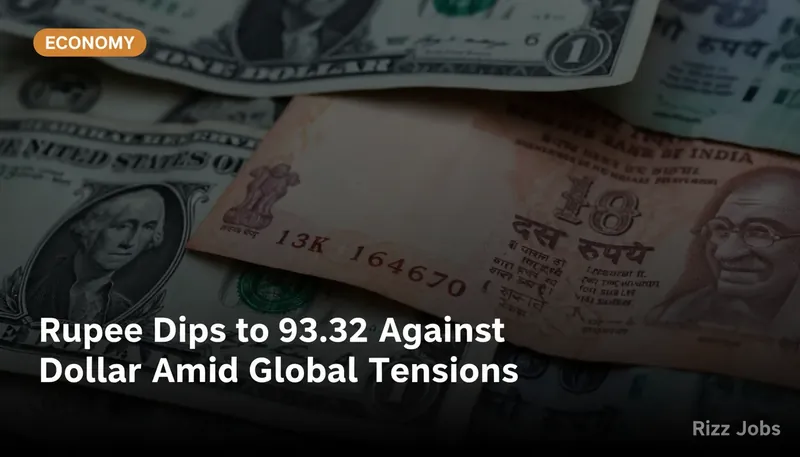
In a significant downturn, the Indian Rupee fell by 49 paise to 93.32 against the US Dollar in early trade today. This decline is largely attributed to escalating crude oil prices and heightened geopolitical tensions, notably the US's recent blockade of Iranian ports. These developments have compounded existing pressures on the Rupee, which has been experiencing a downward trend in recent weeks. The blockade has not only raised oil prices but also disrupted global trade, influencing investor sentiment and leading to capital outflows from Indian stock markets.
The depreciation of the Rupee can have far-reaching implications for the Indian economy. A weaker Rupee makes imports more expensive, particularly crude oil, which is a significant component of India's import bill. This could lead to higher inflationary pressures domestically, affecting consumer prices and potentially prompting the Reserve Bank of India to reconsider its monetary policy stance.
For investors, the current scenario presents both challenges and opportunities. While the depreciation may deter foreign investment in the short term, it could also make Indian exports more competitive globally, providing a potential boost to sectors such as IT and textiles. However, the volatility in currency markets necessitates a cautious approach, with investors advised to monitor geopolitical developments closely.
The situation underscores the interconnectedness of global markets and the impact of geopolitical events on currency valuations. As the world watches the unfolding developments in the Middle East, Indian investors and policymakers will need to navigate these turbulent waters with strategic foresight.