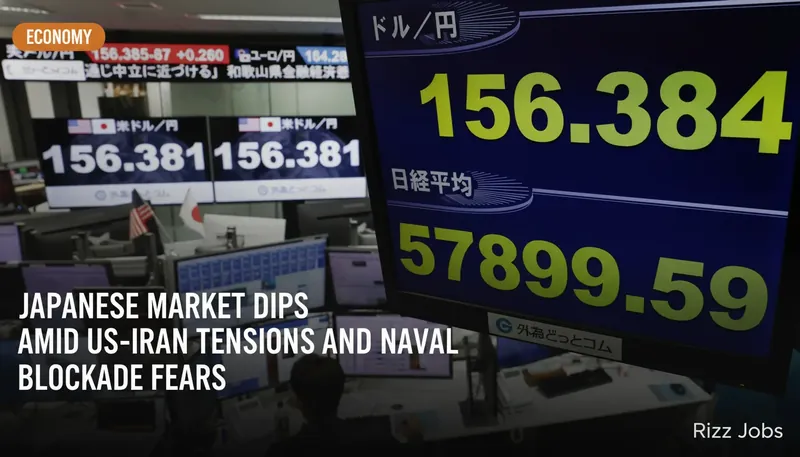
In a volatile start to the trading week, Japanese equities witnessed a downturn as geopolitical tensions between the United States and Iran escalated. The breakdown of peace talks over the weekend has cast a shadow over the fragile ceasefire, with the U.S. Navy reportedly preparing a blockade on Iranian ports. This development has not only heightened regional tensions but also sparked concerns over global oil supply chains, given Iran's strategic position in the energy market.
For Indian investors, the ripple effects of these tensions are significant. Japan, being a major importer of crude oil, could see increased costs, which might affect its economic recovery and, by extension, its trade relations with India. Furthermore, the potential disruption in oil supplies could lead to increased volatility in global oil prices, impacting Indian companies reliant on energy imports.
The Nikkei 225, Japan's benchmark index, reflected these anxieties, closing lower as investors grappled with the uncertainty surrounding the geopolitical landscape. Analysts suggest that if the situation escalates further, it could lead to a risk-off sentiment across Asian markets, including India.
Indian businesses with exposure to Japanese markets or reliant on Japanese imports should brace for potential supply chain disruptions. Additionally, the situation underscores the importance of diversifying energy sources to mitigate risks associated with geopolitical instability.
While the immediate focus remains on the U.S.-Iran standoff, Indian investors would do well to monitor the broader implications on international trade and energy prices. As the situation develops, it will be crucial for market participants to stay informed and agile in their investment strategies.