Hindustan Aeronautics Limited (HAL) reported a robust financial performance for the first quarter of FY27, with a 14% year-on-year increase in revenue from operations to Rs 5,515 crore, up from Rs 4,819 crore in the same period last year.
HAL's earnings per share (EPS) climbed to Rs 23.77 from Rs 20.69, reflecting the company's strong financial health. Following the announcement of these results, HAL's shares closed approximately 2% higher on Wednesday.
International brokerage Nomura highlighted that HAL's earnings exceeded estimates across the board, maintaining a healthy outlook driven by a manufacturing book and bill ratio of 25x. Nomura has raised its target price for HAL shares to Rs 6,314 apiece, indicating a potential upside of over 26% from the previous closing price of Rs 4,995.
“Nomura highlighted that HAL’s earnings beat estimates on all fronts in the first quarter of FY27, with visibility remaining healthy, led by manufacturing book and bill of 25x.”
Nomura
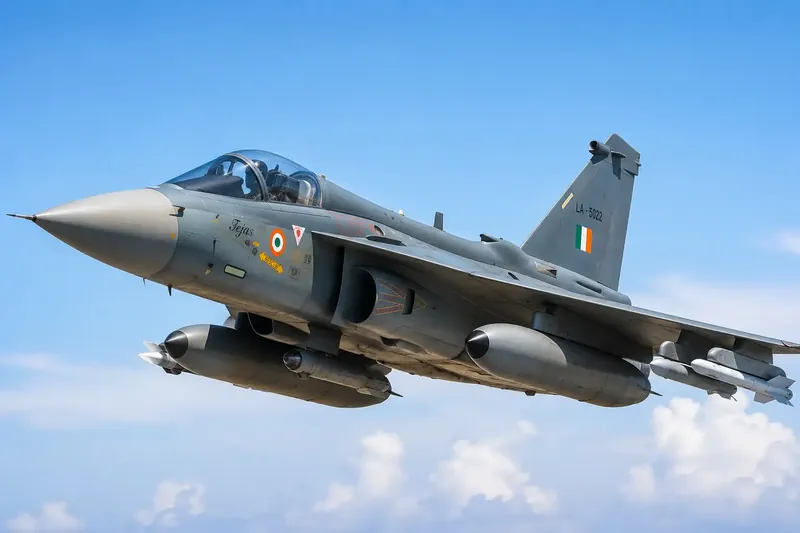
Motilal Oswal Financial Services also increased its target price for HAL shares to Rs 5,800 from Rs 5,500, maintaining a 'Buy' recommendation. The brokerage noted HAL's strong Q1 performance, with margins exceeding expectations. It also highlighted the company's progress in ramping up its LCA manufacturing capacity to 24 aircraft annually and easing supply chain issues for GE engines, which are expected to boost Tejas deliveries from FY28 onwards.
HAL shares have gained over 1.5% in the past week and 11% in the past month, with an overall increase of around 14% in 2026. Over a longer period, HAL shares have delivered returns of 164% over three years and 817% over five years, with a market capitalisation exceeding Rs 3.34 lakh crore.
Background
HAL's strong Q1 performance is part of a broader trend of growth in the Indian defense sector, driven by increased government spending and strategic initiatives to boost domestic manufacturing capabilities.
With HAL's strong financial performance and strategic initiatives, the company is well-positioned for future growth. Investors will be closely watching the execution of key projects and the impact of easing supply chain constraints on production timelines.