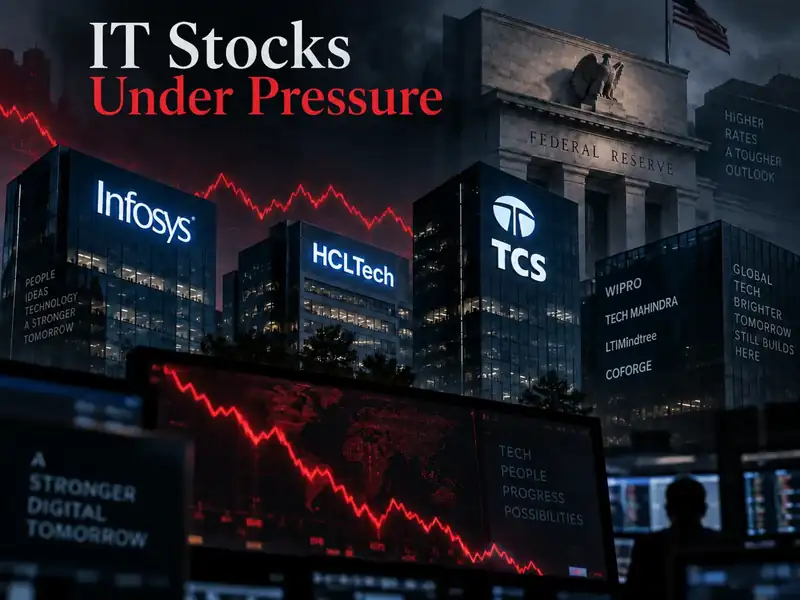
The Nifty IT index fell over 2% to 30,082 on Monday, driven by declines in major IT stocks like Infosys, LTI Mindtree, and Mphasis, each dropping around 3%. This downturn comes amid rising concerns over a potential rate hike by the Federal Reserve, prompted by stronger-than-expected US job growth data.
Infosys, LTI Mindtree, and Mphasis shares each fell approximately 3%, while Tech Mahindra, OFSS, Coforge, HCL Technologies, Wipro, Persistent Systems, and TCS saw declines of 1-2%. The broader market sentiment was affected by US nonfarm payrolls increasing by 1.62 lakh in August, significantly surpassing economists' expectations of 56,000.
The robust job growth in the US has led traders to anticipate a 57% chance of a Federal Reserve rate hike in September. Such a move could potentially curb client spending in the US, impacting Indian IT firms that derive a substantial portion of their revenue from this market.
The Indian IT sector has experienced volatility this year, with initial selloffs due to AI-driven disruptions followed by resilience amid a global tech selloff. HSBC suggests India could serve as an "anti-AI" diversifier, as foreign investors seek to broaden their portfolios.
Despite AI-related concerns, brokerage firm Anand Rathi believes the AI cycle is transitioning from "building capacity" to "proving payback," which could benefit Indian IT firms. They argue that AI is expanding the total addressable market, creating opportunities in deployment, governance, and legacy modernization.
Background
The Indian IT sector has faced a near three-year spending recession due to weak discretionary budgets, elongated deal cycles, and AI-driven revenue deflation. However, experts believe that the sector's strengths in deployment and integration could help it capitalize on the evolving AI landscape.
Looking ahead, investors should monitor how the Federal Reserve's decisions impact client spending in the US, which remains a critical revenue source for Indian IT companies. The sector's ability to adapt to AI-driven changes will also be crucial in maintaining its growth trajectory.