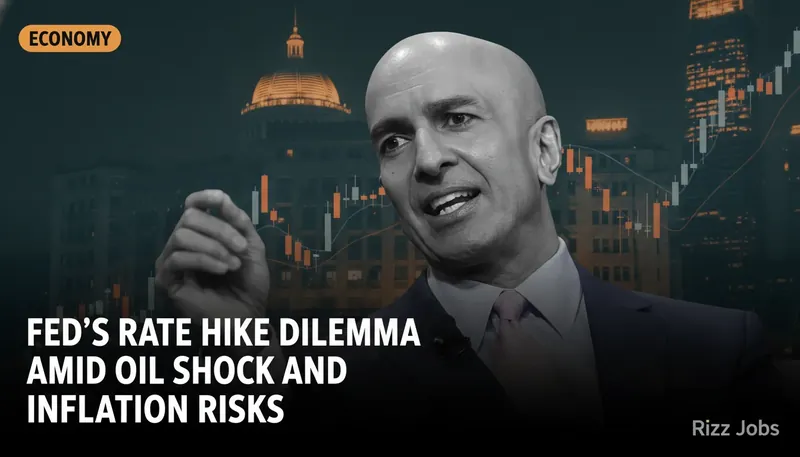
The geopolitical tensions involving the U.S. and Iran have introduced a new layer of complexity to the Federal Reserve's monetary policy strategy. Neel Kashkari, President of the Minneapolis Federal Reserve, has voiced concerns that the unfolding situation could necessitate a series of interest rate hikes. The potential conflict could disrupt oil supplies, leading to a spike in global oil prices, which in turn could fuel inflationary pressures in the U.S. economy. This scenario poses a significant challenge to the Fed's goal of maintaining a 2% inflation target, a cornerstone of its monetary policy.
Kashkari's remarks come in the wake of the latest Fed meeting, where he dissented from the consensus, highlighting the need for the central bank to remain vigilant and responsive to the evolving economic landscape. The possibility of an oil shock could have far-reaching implications, not just for the U.S. economy but also for global markets, including India, which is heavily reliant on oil imports. A surge in oil prices could exacerbate inflationary pressures in India, potentially leading to a depreciation of the rupee and impacting the country's fiscal deficit.
For Indian investors, the Fed's potential rate hikes could lead to increased volatility in global financial markets. Higher U.S. interest rates often result in capital outflows from emerging markets like India, as investors seek higher returns in the U.S. This could lead to a depreciation of the rupee and increased borrowing costs for Indian companies. Moreover, the uncertainty surrounding oil prices could impact sectors reliant on fuel, such as transportation and manufacturing, further complicating the economic outlook.
In summary, the geopolitical tensions and their impact on oil prices are a reminder of the interconnectedness of global economies. Indian investors and policymakers will need to closely monitor developments and be prepared to adapt to a rapidly changing environment.