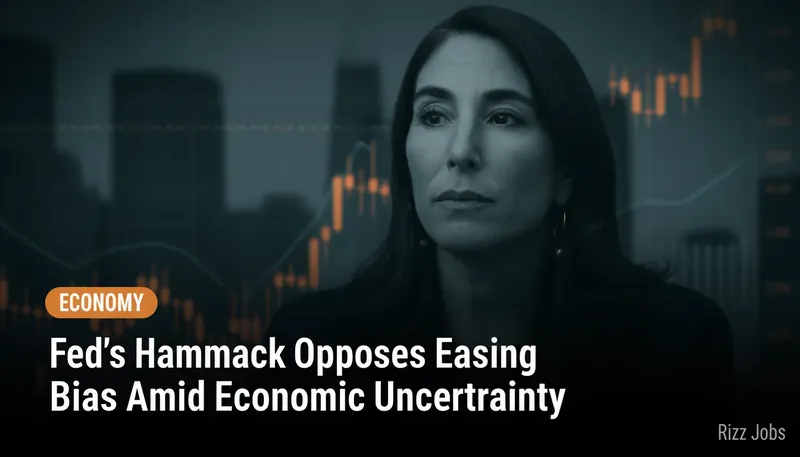
In a significant move that could influence global financial markets, Federal Reserve Bank of Cleveland President Beth Hammack has expressed her dissent against maintaining an easing bias in the Federal Reserve's monetary policy. Speaking on Friday, Hammack highlighted the prevailing uncertainty in both economic and inflationary outlooks as key reasons for her stance. This development comes at a time when central banks worldwide are grappling with the dual challenge of fostering economic growth while keeping inflation in check.
Hammack's position underscores a growing debate within the Federal Reserve about the appropriate course of action in the current economic climate. While some policymakers advocate for maintaining an accommodative stance to support economic recovery, others, like Hammack, are concerned about the potential risks of persistent inflation. Her remarks suggest a shift towards a more cautious approach, emphasizing the need to reassess the balance between supporting growth and controlling inflation.
For Indian investors and business leaders, Hammack's comments could signal potential volatility in global markets. The Federal Reserve's policies have far-reaching implications, influencing everything from currency valuations to capital flows. A shift away from an easing bias could lead to a strengthening of the US dollar, impacting emerging markets like India. Additionally, changes in US interest rates could affect the cost of borrowing for Indian companies with dollar-denominated debt.
As the global economic landscape continues to evolve, Hammack's dissent highlights the importance of closely monitoring central bank policies. Indian stakeholders must remain vigilant, ready to adapt their strategies in response to shifts in the international financial environment. The coming months will be crucial in determining whether the Federal Reserve will pivot towards a more neutral or even tightening stance, with significant implications for global economic stability.