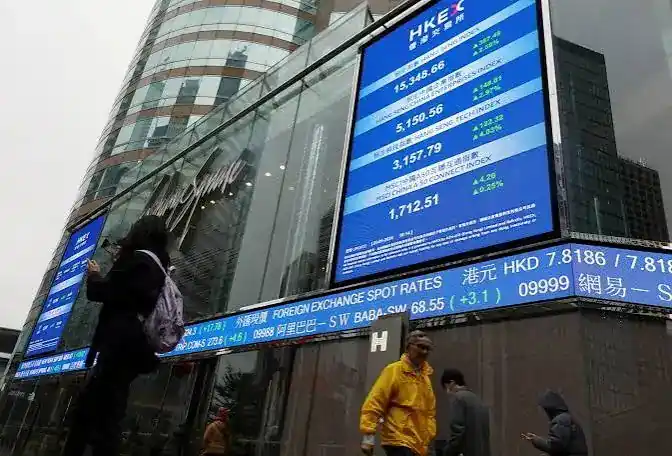
Zhongji Innolight's shares fell nearly 8% in their Hong Kong debut, opening at HK$971 and later trading at HK$902, below the HK$980 offer price. This decline occurred amidst a broader retreat in Asian semiconductor stocks, affecting investor sentiment towards AI-related companies.
The company became the most actively traded stock in Hong Kong by turnover during mid-morning trading, surpassing major technology names such as Tencent and Xiaomi. Despite the weak debut, analysts believe Zhongji's strong position in high-speed optical communications and its exposure to AI infrastructure spending could support long-term earnings growth.
The IPO was Hong Kong's largest share offering since Alibaba's $12.9 billion secondary listing in 2019 and Asia's second-largest this year, following CXMT's $8.6 billion Shanghai IPO. Hong Kong's equity fundraising has gained momentum in 2026, with $33.8 billion raised through share sales so far, more than doubling last year's figures.
Zhongji Innolight manufactures optical transceivers for high-speed data transmission in data centres and claimed to be the world's largest optical interconnect solutions provider by revenue last year. The United States accounted for 61.7% of Zhongji's first-quarter revenue, underscoring its exposure to global AI infrastructure demand.
The company has faced geopolitical challenges, notably being added to a U.S. list of companies suspected of military links, a move Zhongji has contested. Despite these challenges, investors remain focused on Zhongji's role in supporting AI data centre expansion and high-speed connectivity solutions.
Background
Zhongji Innolight's IPO marks a significant event in Hong Kong's equity market, being the largest since Alibaba's secondary listing in 2019. The company's focus on high-speed optical communications positions it well in the growing AI infrastructure sector, despite current market volatility and geopolitical challenges.
Looking ahead, market watchers will be keen to see how Zhongji navigates ongoing volatility in AI-related stocks and geopolitical tensions, which could lead to sharp price swings in the near term.