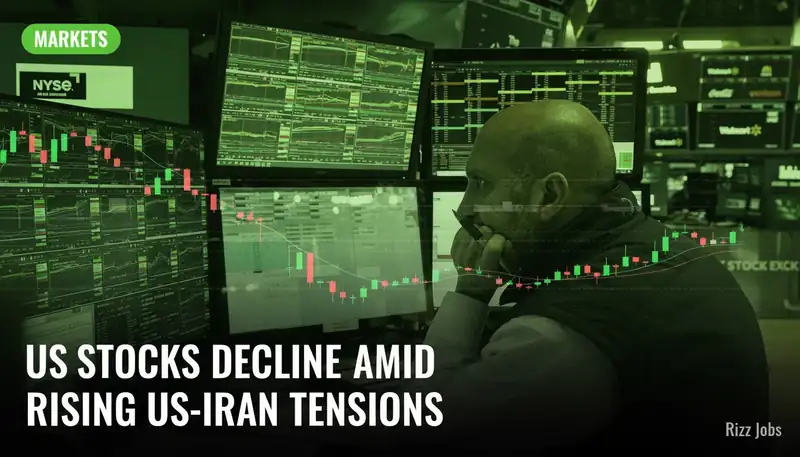
In a jittery start to the week, Wall Street's major indices opened with slight declines as escalating tensions between the United States and Iran weighed heavily on investor sentiment. The Dow Jones Industrial Average, S&P 500, and Nasdaq Composite all registered minor drops in early trading on Monday, reflecting the market's unease over potential geopolitical disruptions. This comes despite the backdrop of last week's robust earnings reports, which had initially buoyed market optimism.
The geopolitical landscape has once again taken center stage, overshadowing domestic economic indicators and corporate performances. Investors are particularly concerned about the implications of heightened US-Iran tensions on global oil prices and supply chains, which could have cascading effects on inflation and economic growth. The energy sector, in particular, is under scrutiny as any disruption in oil supply could lead to increased volatility in commodity markets, affecting related industries and consumer prices.
For Indian investors, these developments are crucial as they could influence global market trends and, by extension, the Indian stock market. The sensitivity of Indian markets to global cues means that heightened volatility in the US could lead to similar patterns in India, affecting sectors such as IT and pharmaceuticals, which have significant exposure to the US market.
Moreover, the potential impact on oil prices is of particular concern for India, a major oil importer. Any sustained increase in oil prices could exacerbate inflationary pressures and impact the current account deficit, posing challenges for policymakers. Indian investors are advised to keep a close watch on developments in the Middle East and assess their portfolio strategies accordingly, considering both the risks and opportunities that may arise from this geopolitical situation.