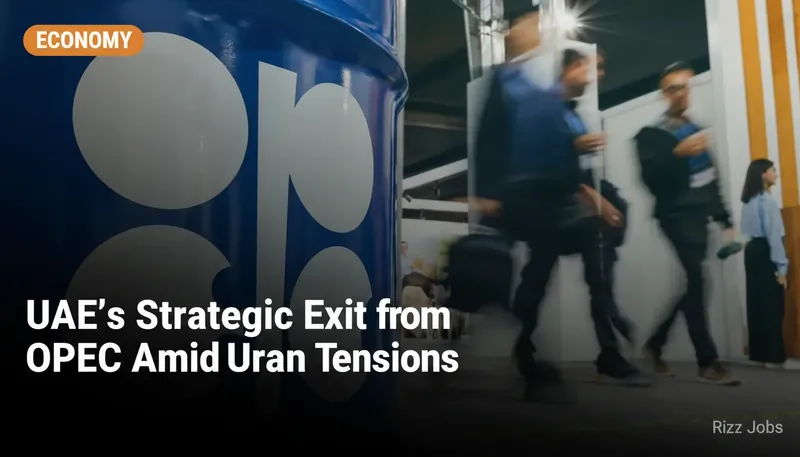
In a move that has sent ripples through the global energy markets, the United Arab Emirates (UAE) has announced its departure from the Organization of the Petroleum Exporting Countries (OPEC). This decision, while surprising to some, is the culmination of a strategic shift influenced by a complex interplay of economic and geopolitical factors. The UAE, a significant oil producer, has been reassessing its role within OPEC, especially as the global energy landscape undergoes rapid transformation. The ongoing conflict between the United States and Iran has further complicated the region's dynamics, prompting the UAE to reconsider its alliances and economic strategies.
For Indian investors, this development holds significant implications. The UAE's exit could lead to volatility in oil prices, affecting India's import bills and, consequently, its trade balance. As one of the world's largest oil importers, India must now navigate these uncertain waters, potentially seeking alternative energy partnerships or accelerating its renewable energy initiatives.
The UAE's decision also underscores a broader trend of diversification within the Gulf states, as they seek to reduce their economic dependency on oil. This shift aligns with the UAE's Vision 2030, which aims to foster a more sustainable and diversified economy. Indian businesses and investors should closely monitor these developments, as they could present new opportunities in sectors such as technology, infrastructure, and renewable energy.
Overall, the UAE's exit from OPEC is a strategic maneuver that reflects the nation's long-term vision amidst a backdrop of regional instability and global energy transitions. For India, this is a moment to reassess its energy strategy and explore new avenues for economic collaboration with the UAE and other Gulf nations.