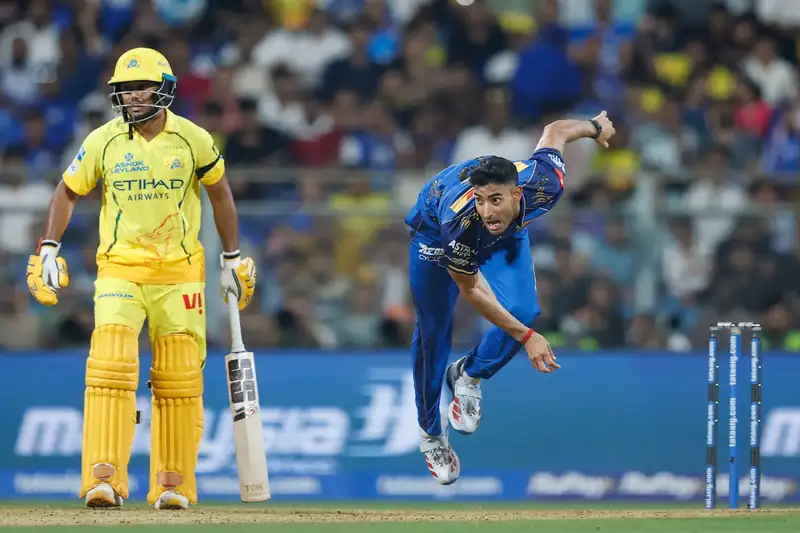
In the high-stakes environment of the Indian Premier League, strategic decisions can often make or break a team's performance. Recently, the spotlight has turned to the Mumbai Indians' choice of Krish Bhagat for the crucial 16th and 20th overs. This decision has sparked a debate among cricket analysts and fans alike, particularly after Ambati Rayudu and Mitchell McClenaghan suggested a tactical reshuffle involving Tilak Varma and Sherfane Rutherford. The Mumbai Indians, known for their strategic acumen, have often relied on young talents to deliver under pressure. Bhagat's inclusion in these pivotal overs indicates the team's confidence in his ability to handle high-pressure situations. However, Rayudu and McClenaghan's suggestion to swap the batting positions of Varma and Rutherford adds another layer of complexity to the discussion. Such strategic tweaks are not uncommon in the IPL, where teams constantly adapt to the dynamic nature of the game. For investors and stakeholders in the IPL ecosystem, these decisions are more than just on-field tactics; they reflect broader team strategies that can influence merchandise sales, viewership ratings, and sponsorship deals. The IPL's ability to blend sports with business makes it a unique entity in the global sports arena. As the season progresses, the performance of players like Bhagat could have significant implications not only for the Mumbai Indians but also for the league's overall market dynamics. In a league where every decision is scrutinized, the strategic deployment of players like Krish Bhagat could set a precedent for future matches and seasons.
ipl
Strategic Moves in IPL: Evaluating Krish Bhagat's Role
Rizz Jobs News Desk··2 min read
Market Briefing
- The Mumbai Indians' decision to utilize Krish Bhagat in crucial overs has sparked debate.
- Analysts suggest strategic tweaks, reflecting the complex dynamics of IPL tactics.
Share this story
Topics
IPL strategyMumbai IndiansKrish BhagatAmbati RayuduMitchell McClenaghan
Stay Informed
India's financial news, delivered daily.
Finance, markets, economy and startup updates — straight to your inbox.
Subscribe Free →