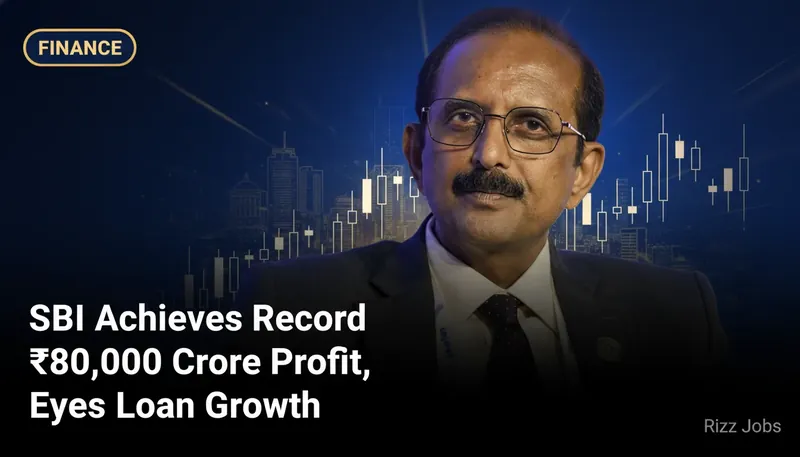
In a remarkable financial performance, the State Bank of India (SBI) has reported a record profit of over ₹80,000 crore, marking a significant milestone in the bank's history. This achievement comes amidst investor concerns over the bank's net interest income and margins. However, SBI's Chairman, CS Setty, has assured stakeholders that the worst is behind them, with net interest margins (NIM) expected to stabilize around 3%. This stabilization is crucial as NIMs are a key indicator of a bank's profitability, reflecting the difference between the interest income generated and the amount of interest paid out to lenders.
SBI's robust performance is further underscored by strong deposit growth, which provides the bank with a solid foundation to support its ambitious loan growth targets. The bank is projecting a loan expansion of 13–15% by FY27, which is expected to span across all segments, including retail, corporate, and small and medium enterprises (SMEs). This growth trajectory is indicative of SBI's strategic focus on enhancing its lending portfolio to drive future profitability.
The bank's performance is particularly noteworthy given the current global economic uncertainties, including geopolitical tensions and fluctuating commodity prices, which pose potential risks to the banking sector. SBI's management is closely monitoring these global risks, ensuring that the bank remains resilient and well-positioned to navigate any challenges.
For Indian investors and business readers, SBI's record profit and positive outlook signal a strong performance by the country's largest bank, which could have broader implications for the Indian banking sector. The bank's ability to maintain stable NIMs while achieving significant loan growth could set a benchmark for other financial institutions aiming to balance profitability with growth.
As SBI continues to leverage its extensive network and technological advancements, its commitment to sustainable growth and risk management will be crucial in maintaining investor confidence and driving long-term value.