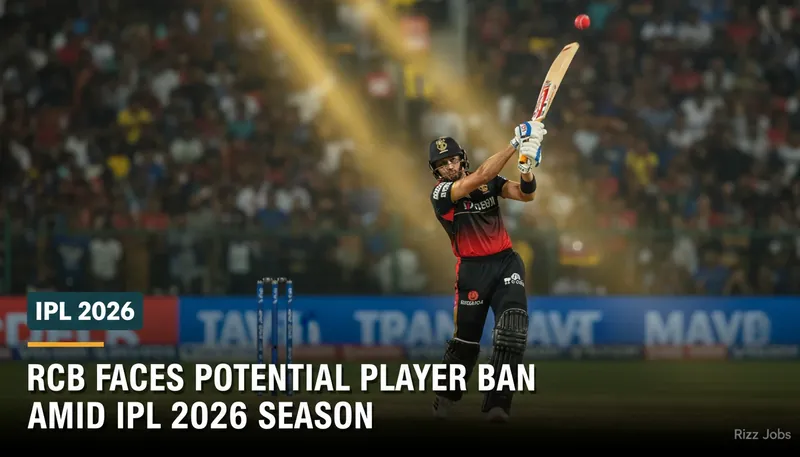
In a significant development that could impact the Indian Premier League (IPL) 2026 season, Royal Challengers Bangalore (RCB) is facing a potential setback as one of its star players may face a ban. This comes at a crucial juncture in the tournament, threatening to disrupt the team's momentum. According to sources, the Board of Control for Cricket in India (BCCI) is reviewing the player's conduct under its stringent disciplinary rules. While the specifics of the alleged infraction remain undisclosed, such actions typically pertain to breaches of conduct, anti-corruption protocols, or doping regulations.
The implications of a ban could be substantial for RCB, a team that has historically relied on its star-studded lineup to navigate the high-stakes IPL environment. With Virat Kohli at the helm, RCB has been a formidable contender, though the elusive IPL trophy has remained out of reach. The potential absence of a key player could necessitate strategic adjustments, possibly affecting team dynamics and performance.
For investors and stakeholders in the IPL ecosystem, this development underscores the importance of governance and compliance in sports management. The IPL, a financial juggernaut, attracts significant investment from sponsors, advertisers, and broadcasters. Any disruption in team performance can have ripple effects, influencing viewership ratings and, consequently, advertising revenues. Moreover, player bans can deter potential sponsors wary of associating with controversy.
As the BCCI deliberates, the cricketing world watches closely. The outcome will not only impact RCB's campaign but also serve as a precedent in the league's governance. Investors and business analysts will be keen to see how RCB navigates this challenge, potentially reshaping its strategy to maintain competitiveness in the league.