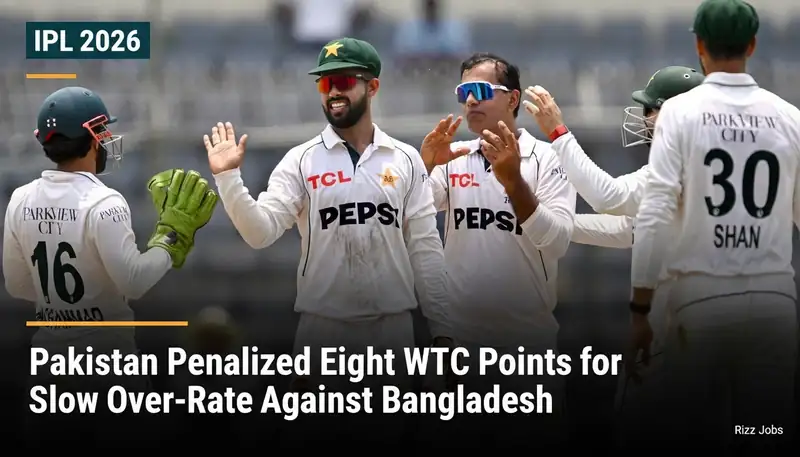
In a significant development in the World Test Championship (WTC), Pakistan has been penalized eight points for maintaining a slow over-rate during their first Test match against Bangladesh. This penalty marks Pakistan as the second team in the current WTC cycle to face such a deduction, following England's two-point penalty during the Lord's Test last year. The decision underscores the International Cricket Council's (ICC) stringent stance on maintaining the pace of play in Test cricket, a move aimed at enhancing the viewer experience and ensuring the smooth progression of matches.
The penalty has immediate implications for Pakistan's standing in the WTC rankings, potentially affecting their chances of qualifying for the final. The WTC, introduced to bring context and competition to Test cricket, has seen teams vying for points across a series of matches, with the ultimate goal of reaching the final. For Pakistan, currently vying for a top spot, this deduction could prove costly in their pursuit of a place in the final showdown.
For Indian investors and business readers, this development highlights the broader impact of regulatory compliance and the importance of adhering to international standards. Just as corporations must navigate regulatory frameworks to avoid penalties and maintain market confidence, cricket teams are similarly required to adhere to ICC regulations to maintain their competitive standing. The ICC's enforcement of over-rate rules serves as a reminder of the importance of compliance in maintaining the integrity and competitiveness of the sport.
Moreover, this incident could have financial implications for the Pakistan Cricket Board (PCB). Performance in the WTC can influence sponsorship deals, broadcasting rights, and overall revenue generation. A drop in rankings due to point deductions can adversely affect the team's marketability and financial prospects. As cricket continues to be a major revenue generator in South Asia, maintaining competitive integrity is crucial for sustaining financial growth.
In conclusion, Pakistan's penalty for a slow over-rate is a critical reminder of the importance of regulatory compliance in sports and business. As teams strive for excellence on the field, adherence to rules and regulations remains paramount in safeguarding their competitive and financial futures.