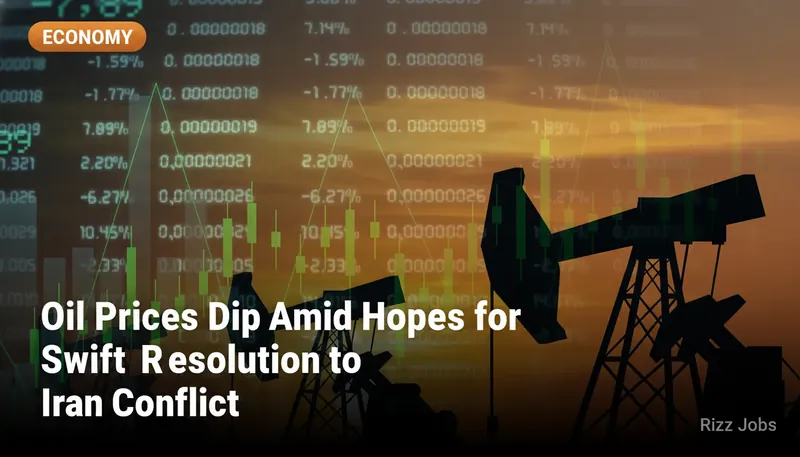
Oil markets experienced a slight easing in prices following U.S. President Donald Trump's assertion that the conflict with Iran could be resolved swiftly. This statement comes amid heightened tensions in the Middle East, which have kept global oil markets on edge. Despite the temporary relief, analysts caution that the underlying issues remain unresolved, potentially leading to sustained high prices. The geopolitical landscape in the Middle East is notoriously volatile, and any perceived instability can cause significant fluctuations in oil prices.
For Indian investors, the situation presents a mixed bag. On one hand, a reduction in oil prices could alleviate some pressure on the Indian economy, which is heavily reliant on oil imports. Lower oil prices could lead to reduced inflationary pressures and provide some breathing room for the Reserve Bank of India in terms of monetary policy. However, the potential for renewed conflict and supply disruptions remains a significant risk.
The Indian government and businesses must remain vigilant, as any escalation in the Middle East could lead to sharp increases in oil prices, impacting everything from transportation costs to the broader economic outlook. The situation underscores the importance of diversifying energy sources and investing in alternative energy to mitigate the impact of such geopolitical events.
In conclusion, while the immediate outlook for oil prices appears slightly positive, the underlying geopolitical tensions suggest that Indian investors and policymakers should remain cautious. The potential for renewed conflict and supply disruptions could keep oil prices elevated, impacting the broader economy.