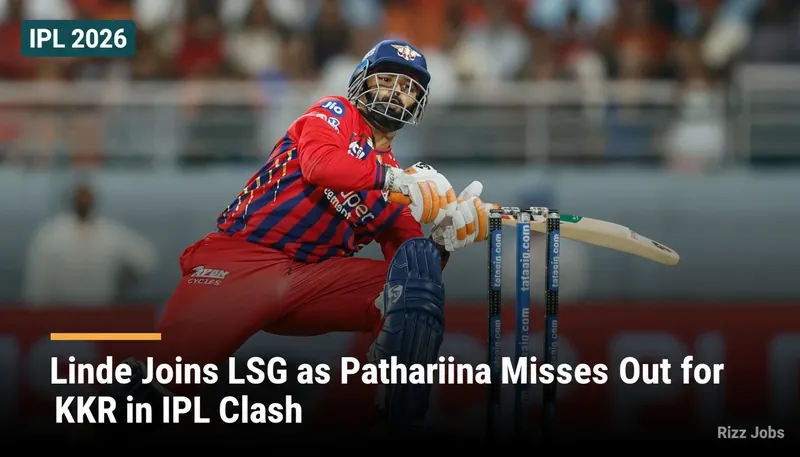
In a strategic move that could influence the dynamics of the Indian Premier League (IPL), Linde has been named in the playing XI for the Lucknow Super Giants (LSG) as they opt to bowl first against the Kolkata Knight Riders (KKR). The absence of Pathirana for KKR adds another layer of intrigue to the matchup. Aiden Markram, typically known for his middle-order prowess, is set to open the innings alongside Mitchell Marsh for LSG. This decision underscores LSG's flexible approach and willingness to experiment with player roles to optimize team performance. Ayush Badoni, another promising talent, is slated to bat at No. 5, indicating the team's confidence in his ability to anchor the innings if needed.
The IPL, a significant event in the cricket calendar, not only captivates millions of fans but also holds substantial economic implications. The tournament's outcomes can impact sponsorship deals, merchandise sales, and even influence stock prices of companies associated with the teams. Investors and business leaders should keep an eye on team performances and player selections, as these can affect brand valuations and market perceptions. The inclusion of Linde and the strategic placement of players like Markram and Badoni reflect the evolving strategies within the league, aiming to maintain competitiveness and fan engagement.
As the IPL progresses, the decisions made by team managements, such as player rotations and lineup adjustments, will continue to be pivotal. These choices not only determine the immediate success on the field but also shape the long-term brand equity and financial health of the franchises involved. For stakeholders, understanding these dynamics is crucial for making informed decisions in the sports business landscape.