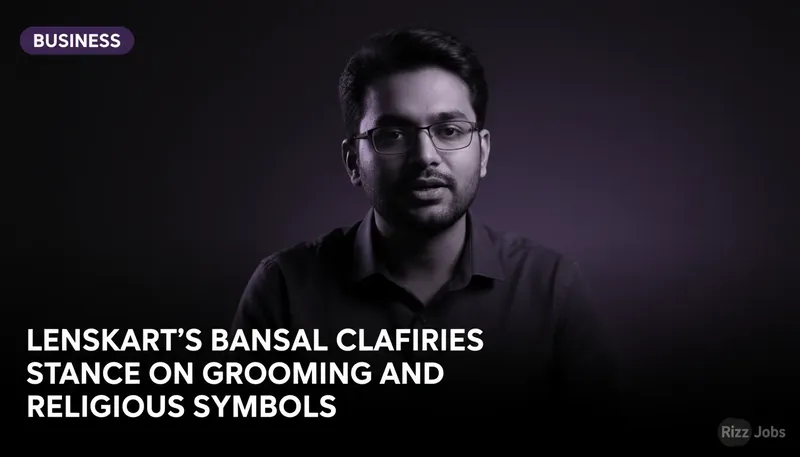
In a recent statement, Peyush Bansal, CEO of Lenskart, addressed concerns regarding the company's grooming policy, which had gone viral, sparking debates on social media. Bansal clarified that the policy in question is outdated and does not reflect the current ethos of the company. He emphasized that Lenskart, a leading eyewear retailer in India, prides itself on a diverse workforce where employees are encouraged to express their faith and cultural identities freely. This clarification comes at a time when corporate policies on personal expression are under scrutiny, especially in a multicultural country like India.
Bansal's statement is particularly significant given the increasing focus on inclusivity and diversity in corporate India. As companies strive to create more inclusive workplaces, policies that restrict personal expression can become contentious. Lenskart's reaffirmation of its commitment to allowing religious symbols and cultural expressions at work not only aligns with global best practices but also enhances its brand image as an employer of choice in the competitive retail sector.
For investors and market watchers, this move signals Lenskart's adaptability and sensitivity to employee needs, which could translate into better employee satisfaction and productivity. In an industry where customer service and employee engagement are critical, such policies can impact the company's bottom line. As Lenskart continues to expand its footprint across India and internationally, maintaining a positive corporate culture will be crucial to sustaining its growth trajectory.
This development also highlights the broader trend of Indian companies revisiting and revising workplace policies to better align with modern values and expectations. As the business landscape evolves, companies that proactively address these issues are likely to gain a competitive edge.


