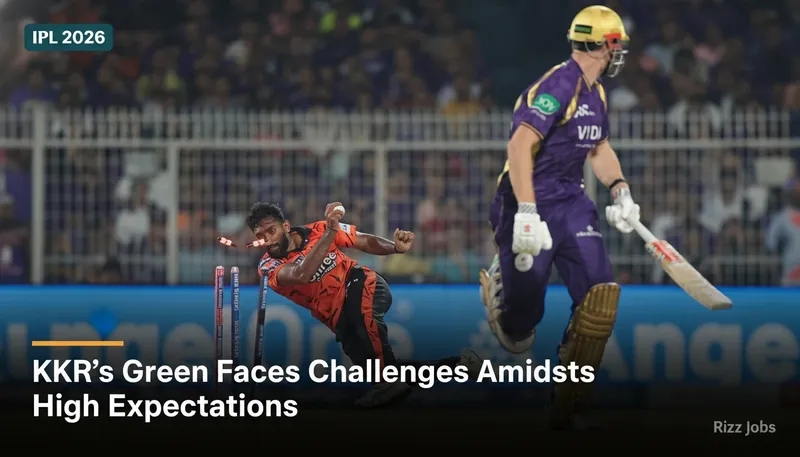
The Indian Premier League (IPL) has always been a stage where both seasoned and emerging cricketers showcase their prowess. However, for the Kolkata Knight Riders' (KKR) Cameron Green, this season has been a challenging one. Despite being the most expensive overseas player in the IPL, Green has struggled to find his rhythm, leading to discussions on whether KKR should reconsider his batting position. Former Australian captain Aaron Finch has weighed in on the matter, suggesting that while Green appears 'tentative', it might not be prudent for KKR to push him down the order just yet.
Green's hefty price tag comes with its own set of pressures, both on the player and the franchise. As an investment, KKR expects significant returns in terms of performance and match-winning contributions. However, the current season has seen Green grappling with form, which raises questions about the balance between player potential and immediate results. Finch's comments highlight a critical decision-making juncture for KKR's management. Should they give Green more time to adapt and find his footing, or should they make strategic changes to optimize their lineup?
From a business perspective, the situation underscores the importance of managing high-value assets effectively. For investors and stakeholders in the sports industry, Green's performance is a reminder of the unpredictable nature of talent acquisition and the risks involved. The IPL, with its blend of cricket and commerce, serves as a microcosm of larger market dynamics where high investments do not always guarantee immediate returns.
As the season progresses, KKR's handling of Green will be closely watched, not only by fans but also by analysts who view the IPL as a significant economic entity. The franchise's decisions could set precedents for future player management strategies in high-stakes environments.