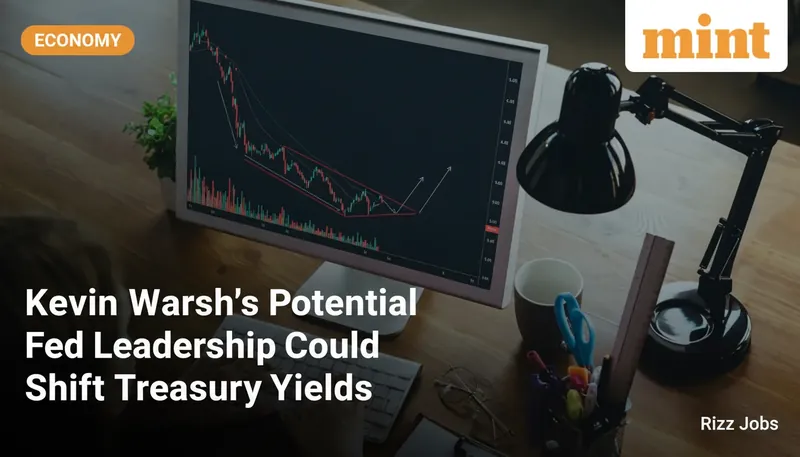
The potential appointment of Kevin Warsh as the head of the Federal Reserve could have significant implications for the U.S. Treasury market, a cornerstone of global finance. Wall Street strategists are closely monitoring this development, as Warsh's leadership might break the current stagnation in the $31 trillion Treasuries market. Historically, Warsh is known for his pragmatic approach to monetary policy, which could lead to a recalibration of interest rate strategies.
Under Warsh's guidance, the Federal Reserve might adopt a more hawkish stance, potentially accelerating the tapering of asset purchases. This could lead to a steepening of the yield curve, where shorter-dated Treasury yields decrease while longer-dated yields rise. Such a scenario would be a boon for investors who have positioned themselves for a steepener trade, betting on the widening gap between short and long-term interest rates.
For Indian investors, a shift in U.S. Treasury yields could have a ripple effect on global bond markets, including India's. Indian government bonds might experience increased volatility, and the Reserve Bank of India could face pressure to adjust its monetary policy in response to changes in global capital flows. Additionally, a stronger dollar resulting from higher U.S. yields could impact the Indian rupee, influencing import costs and inflation.
As markets anticipate changes in the Fed's leadership, investors should remain vigilant and consider diversifying their portfolios to hedge against potential volatility. Monitoring the Fed's policy direction will be crucial for making informed investment decisions in both domestic and international markets.