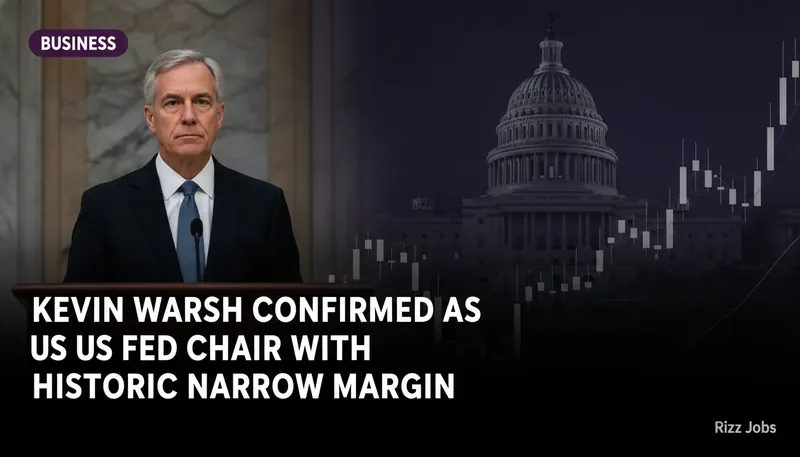
In a historic and closely watched decision, the United States Senate has confirmed Kevin Warsh to lead the Federal Reserve, succeeding Jerome Powell. The confirmation, marked by a narrow 54-45 vote, stands as the slimmest margin ever for a Fed chair appointment. This decision saw John Fetterman of Pennsylvania as the sole Democrat crossing party lines to support Warsh, highlighting the contentious nature of this appointment.
Kevin Warsh, a former member of the Federal Reserve Board, is known for his hawkish views on monetary policy and has been a vocal critic of the Fed's recent policies under Powell. His appointment comes at a crucial time as the US economy grapples with inflationary pressures and the aftermath of pandemic-induced disruptions. Warsh's leadership is expected to usher in a period of tighter monetary policy, which could have significant implications for global markets, including India.
For Indian investors and businesses, Warsh's appointment signals potential volatility in the global financial markets. His stance on interest rates and monetary tightening could lead to fluctuations in capital flows, impacting the Indian rupee and foreign investments. Indian corporates with exposure to the US market may need to brace for changes in borrowing costs and currency exchange rates.
Moreover, Warsh's leadership could influence the trajectory of US-India economic relations. As the Fed navigates its policy under new leadership, Indian policymakers and the Reserve Bank of India may need to adjust their strategies to align with global financial trends.
In summary, Kevin Warsh's confirmation as the Federal Reserve Chair is a pivotal development with far-reaching consequences for global economies, including India. Stakeholders in the Indian financial landscape should closely monitor the Fed's policy directions under Warsh's leadership to mitigate potential risks and capitalize on emerging opportunities.


