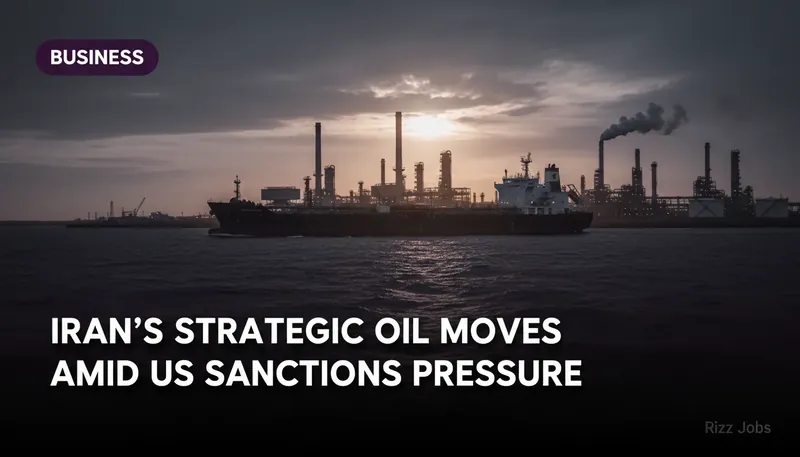
In the face of mounting US sanctions, Iran is strategically maneuvering its oil production and storage capabilities to withstand economic pressure. The geopolitical tension in the Middle East has reached a critical juncture, with Iran facing the dual challenge of maintaining oil exports while managing domestic storage constraints. As the US tightens its blockade, Iran is reportedly cutting back on oil production to manage storage capacity, a move that could have significant implications for global oil markets.
For Indian investors and businesses, this development is noteworthy as it could lead to fluctuations in global oil prices, impacting import costs and inflation. India's heavy reliance on imported oil means that any disruption in supply or price spikes could affect the broader economy. Moreover, the situation underscores the importance of diversifying energy sources and investing in renewable energy to mitigate such geopolitical risks.
Iran's strategy involves a delicate balance between reducing output to prevent storage overflow and maintaining enough production to sustain its economy. This approach may also be a calculated effort to pressure the US and its allies into reconsidering sanctions. The stalemate in the Middle East, with neither side showing signs of backing down, adds an additional layer of complexity to the global energy landscape.
For Indian businesses, particularly those in the energy and manufacturing sectors, staying informed about these developments is crucial. Companies may need to reassess their supply chains and explore alternative sources to ensure stability. Additionally, investors should keep a close eye on oil price trends, as these could influence stock market performance and investment strategies.
In conclusion, Iran's handling of its oil production amid US sanctions is a critical factor in the global energy equation. Indian stakeholders must remain vigilant and adaptable to navigate the potential economic impacts.


