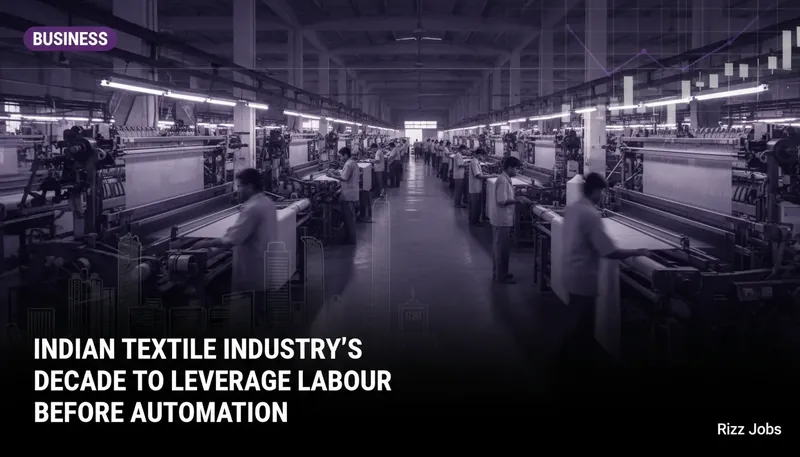
The Indian textile industry stands at a pivotal juncture, with a decade-long opportunity to maximize its labor advantage before the inevitable wave of automation reshapes the sector. This was the key message delivered by a senior executive from Kitex at the Atexcon 2026, inaugurated by Telangana Chief Minister Revanth Reddy. The conference, which aims to tackle the ongoing 'permacrisis' caused by geopolitical shifts and rapid technological advancements, highlighted the urgent need for the textile sector to adapt and innovate.
India's textile industry, a cornerstone of its economy, is heavily reliant on its vast labor force, which has historically provided a competitive edge in global markets. However, as automation technologies become more sophisticated and cost-effective, the industry faces a pressing challenge to transition. The Kitex executive emphasized that the next ten years are crucial for Indian textile companies to invest in skill development and technological integration to maintain their global competitiveness.
The shift towards automation is not just a challenge but also an opportunity for the Indian textile sector to enhance productivity and quality. By adopting advanced manufacturing technologies, companies can streamline operations, reduce costs, and improve product offerings. This transition will require significant investment in both technology and workforce training, ensuring that workers are equipped to handle new machinery and processes.
The government's role in facilitating this transition cannot be overstated. Policy measures that support technological upgrades and workforce re-skilling will be critical. Additionally, fostering an environment conducive to innovation and investment will help the industry overcome the challenges posed by automation.
For Indian investors and business leaders, the message is clear: the textile industry is on the cusp of a transformation that will define its future trajectory. Strategic investments in technology and human capital are essential to capitalize on this decade-long window of opportunity before automation becomes the norm.


