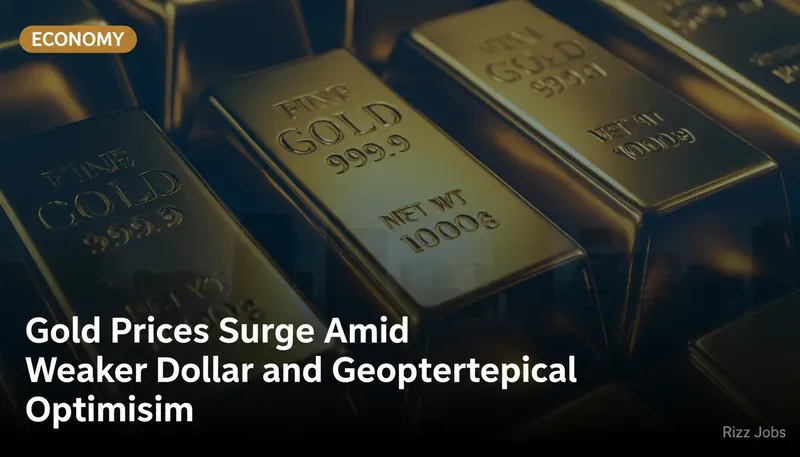
In a significant development for the commodities market, gold prices have surged over 1% as a confluence of factors, including a weakening U.S. dollar and easing oil prices, have reduced inflationary pressures. This upward movement in gold comes amid renewed hopes for a peace agreement between the United States and Iran, which could potentially stabilize the geopolitically sensitive Middle East region. The recent decision by U.S. President Donald Trump to halt military operations in the Strait of Hormuz has further contributed to the dollar's decline, easing geopolitical tensions and impacting the broader precious metals market.
For Indian investors, this development is particularly noteworthy. The weakening of the dollar typically makes gold cheaper for holders of other currencies, which can increase demand and drive up prices. Additionally, the easing of oil prices can have a ripple effect on inflation, potentially influencing the Reserve Bank of India's monetary policy decisions. As gold is traditionally seen as a safe-haven asset, its price movements are closely watched by investors seeking to hedge against economic uncertainties.
The potential U.S.-Iran peace deal could have far-reaching implications for global trade and energy markets, given Iran's significant oil reserves. A peaceful resolution could lead to increased oil exports from Iran, further influencing global oil prices. For India, which imports a substantial portion of its oil, this could mean reduced import costs and a positive impact on the trade deficit.
Overall, the current dynamics in the gold market underscore the interconnectedness of global economic and geopolitical factors. Investors in India and around the world will be keenly observing these developments, as they could have significant implications for investment strategies and economic forecasts.