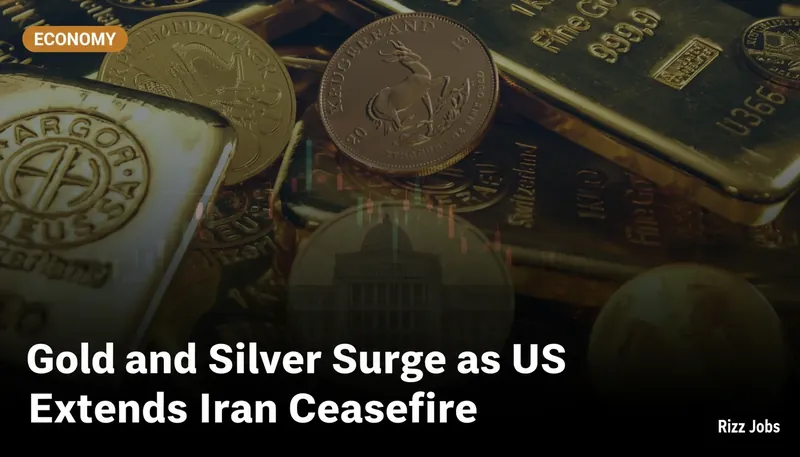
In a significant move impacting global commodity markets, the United States has extended the ceasefire with Iran indefinitely, leading to a notable surge in precious metal prices. On the Multi Commodity Exchange (MCX), silver prices skyrocketed by Rs 5,000, while gold saw an increase of Rs 2,000. This development comes as a relief to investors concerned about inflationary pressures, which have been a persistent theme in recent months. The extension of the ceasefire is expected to stabilize geopolitical tensions, at least temporarily, which in turn has eased some of the upward pressure on oil prices—a major factor influencing inflation.
For Indian investors, this presents a mixed bag of opportunities and challenges. The rise in gold and silver prices could be seen as a hedge against inflation, making them attractive to those looking to preserve wealth. However, analysts caution that the market is likely to remain volatile due to fluctuating currency values and potential shifts in oil prices. Technical analysis suggests that traders should watch for key support and resistance levels to navigate this volatility effectively.
The broader implications of this geopolitical development are significant. With global prices of precious metals elevated, Indian traders and investors must remain vigilant. Domestic trends, such as the performance of the rupee and local demand for gold and silver, will also play crucial roles in shaping market dynamics. As always, diversification remains a prudent strategy to mitigate risks associated with such volatile market conditions.
In conclusion, while the extension of the Iran ceasefire by the Trump administration has provided a temporary respite from inflationary concerns, the path forward remains uncertain. Investors should stay informed and be prepared to adapt their strategies in response to ongoing global and domestic developments.