Contracts for the S&P 500 Index climbed 0.5% and those for the tech-heavy Nasdaq 100 rose 0.6% as the US and Iran agreed to halt strikes and resume talks in Qatar.
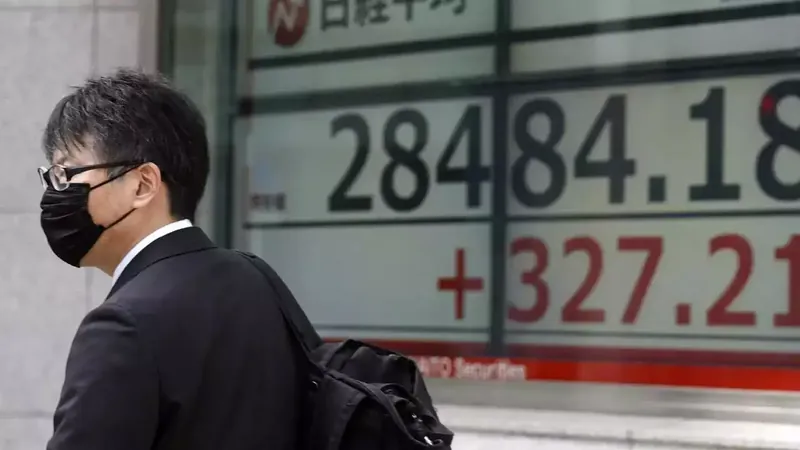
Meanwhile, Asian shares slipped 0.2% in early trading, with South Korea’s Kospi Index falling 1.6% amid anticipation of a new growth strategy unveiling. Brent crude saw a jump of up to 1.9% to over $73 a barrel before settling around $72.10, reflecting ongoing tensions in the Middle East.
The Middle East conflict has intensified with Iran striking a container ship and military bases, prompting US retaliatory strikes. Treasury futures edged lower alongside Australian and New Zealand bonds as higher oil prices rekindled inflation concerns. The dollar remained steady against major peers, while gold dropped 0.8% to $4,055 an ounce.
“The stock market seems to believe that President Trump has no choice but to make concessions as the midterm elections approach.”
Shoji Hirakawa, Chief Global Strategist at Tokai Tokyo Intelligence Lab
Hopes for lasting peace between the US and Iran and optimism over the tech trade have put global stocks on track for their best quarter since 2020. Investors are, however, cautious about risks such as the durability of the AI trade and potential interest rate hikes.
Attention in Asia is on South Korea, where Samsung Electronics Co. and SK Group are set to announce major investment plans, potentially totaling over $1.3 trillion over the next decade. This week, traders will focus on the central banker conference in Sintra, Portugal, and US jobs reports, which may influence Federal Reserve interest rate decisions.
“A strong and strengthening labor market is a recipe for higher US interest rates and US dollar.”
Commonwealth Bank of Australia strategists including Joseph Capurso
The Bank for International Settlements warned of potential threats to global prosperity, including a sharp correction in the AI-driven rally, inflation, and fiscal stress. These factors are seen as pressure points with underlying financial vulnerabilities that could amplify any shock.
Background
The US-Iran talks come amid heightened tensions in the Middle East, impacting global markets and oil prices. Historical conflicts in the region have often led to significant market volatility.
As global markets navigate these developments, investors will be watching the US-Iran talks closely, as well as the outcomes of the central banker conference and US jobs reports, which could signal future economic directions.