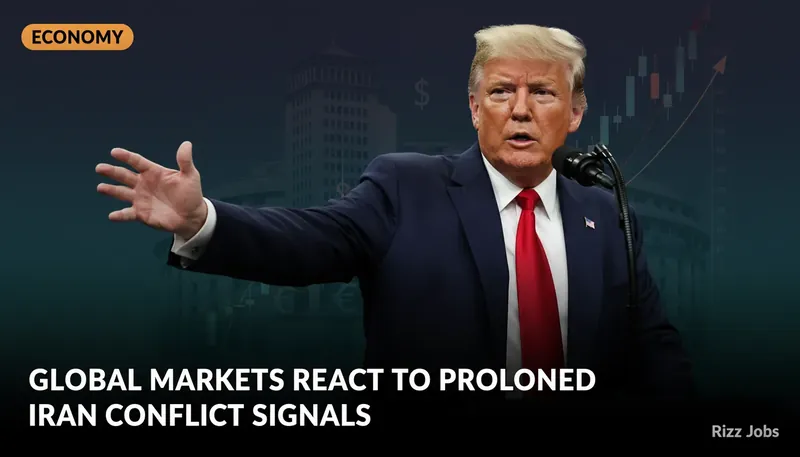
In a move that has sent ripples across global financial markets, U.S. President Donald Trump has signaled that the ongoing conflict with Iran could extend longer than initially anticipated. This development has injected a fresh dose of uncertainty into the markets, leading to a cautious stance among investors worldwide. The immediate reaction was a downturn in equity markets, as investors grappled with the potential implications of a prolonged geopolitical standoff.
The U.S. dollar, often seen as a safe-haven asset during times of global uncertainty, found support as investors sought refuge amid the turmoil. Concurrently, oil prices saw an upward trajectory, driven by concerns over potential supply disruptions in the Middle East, a region that plays a pivotal role in global oil production. For Indian investors, this scenario presents a complex landscape. The rise in oil prices could lead to increased import costs, potentially impacting India's trade balance and exerting pressure on the Indian rupee. Additionally, the volatility in global markets could influence foreign investment flows into Indian equities, necessitating a strategic reassessment by portfolio managers.
The broader economic implications of a prolonged conflict are significant. A sustained rise in oil prices could stoke inflationary pressures, complicating monetary policy decisions for the Reserve Bank of India (RBI). Furthermore, the uncertainty surrounding the conflict's duration adds another layer of complexity to the global economic outlook, which is already grappling with challenges such as trade tensions and slowing growth in major economies.
As global investors navigate this uncertain environment, the focus will likely remain on geopolitical developments and their potential impact on market dynamics. Indian businesses and investors must stay vigilant, adapting their strategies to mitigate risks and capitalize on potential opportunities that may arise from shifting market conditions.