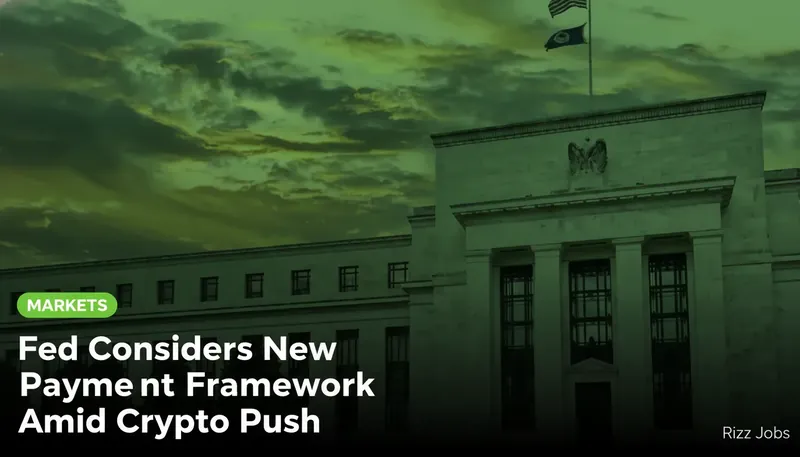
The Federal Reserve has proposed a new framework for payment accounts, aimed at providing fintech and crypto companies limited access to the U.S. payments system. This proposal, announced shortly after an executive order by President Donald Trump, seeks to address growing demands for faster and cheaper transaction capabilities without extending full banking privileges.
The proposed framework introduces a narrower version of the traditional Fed master account. Eligible firms would be able to transfer money through the Federal Reserve system but would not have access to intraday credit, the Fed’s discount window, or interest on reserves. This move reflects increasing pressure from fintech and crypto companies seeking to reduce transaction costs and improve payment efficiency.
However, the proposal is expected to face opposition from traditional banking groups, which have consistently resisted granting such access to non-bank financial firms. Concerns have been raised about the potential introduction of operational, liquidity, and compliance risks into the financial system by lightly regulated fintech and crypto entities.
The debate has intensified as digital asset and fintech firms pursue banking-like charters to qualify for Fed accounts. Notably, crypto exchange Kraken recently secured a Federal Reserve master account with certain restrictions, marking a significant milestone after a lengthy application process. Other firms, including Ripple, Anchorage Digital, and Wise, are also seeking similar access.
The proposal has also revealed internal divisions within the Federal Reserve. Fed Governor Michael Barr dissented, citing inadequate safeguards against potential misuse for illicit financial activities. His concerns highlight ongoing regulatory apprehensions about anti-money laundering oversight and financial stability issues related to digital asset firms.
Despite these proposed changes, the Federal Reserve clarified that the framework would not alter the legal eligibility requirements for payment accounts. Only depository institutions would remain eligible to apply, with final approval authority resting with regional Federal Reserve banks. The central bank has requested regional Fed banks to temporarily pause decisions on pending applications from nontraditional firms to ensure a uniform approach during the review process.
Background
The proposal comes at a time when fintech and crypto companies are increasingly seeking to integrate more deeply into the traditional financial system. The move reflects broader trends in the financial industry where technology-driven firms are challenging established banking norms and pushing for regulatory changes to accommodate new business models.
The proposal could significantly reshape the competitive landscape in financial services, enabling fintech and crypto companies to interact more directly with the U.S. payments system and potentially reducing their reliance on intermediary banks. However, it also raises fresh questions about regulation, oversight, and the evolving role of non-bank institutions within the broader financial system.