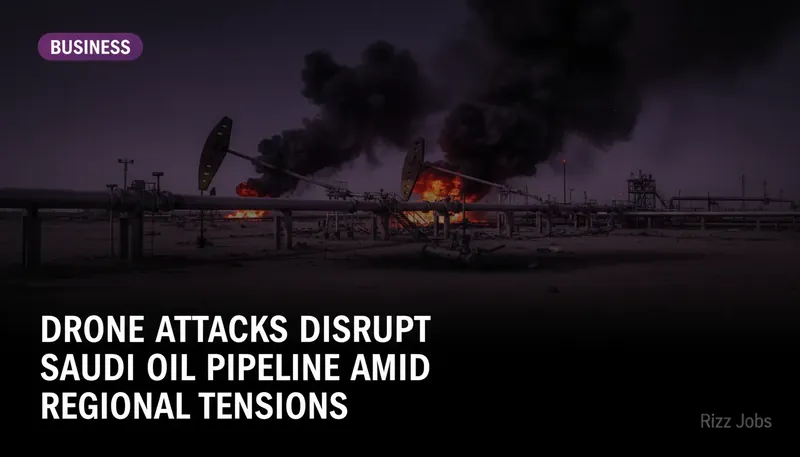
In a significant escalation of regional tensions, a drone attack has targeted Saudi Arabia's critical East-West oil pipeline, despite ongoing truce efforts. The attack, which has also seen similar threats to UAE, Kuwait, and Bahrain, underscores the fragile geopolitical climate in the Middle East, a region pivotal to global energy supplies. The East-West pipeline, a strategic infrastructure component, is crucial for transporting oil from the Eastern Province to the Red Sea, thereby bypassing the volatile Strait of Hormuz. This incident raises concerns about potential disruptions in global oil supply chains, which could lead to increased volatility in energy markets.
For Indian investors and businesses, this development could have far-reaching implications. India, as a major importer of oil, may face fluctuations in crude prices, impacting everything from transportation costs to inflation rates. The Indian government and businesses will likely need to reassess their energy procurement strategies, considering potential supply chain vulnerabilities. Additionally, this situation may prompt a reevaluation of India's energy security policies, emphasizing the need for diversification of energy sources and increased investment in renewable energy.
Moreover, the attacks highlight the broader geopolitical risks that can affect global markets, reminding investors of the importance of geopolitical analysis in investment strategies. Companies with significant exposure to the Middle East may need to prepare for potential operational disruptions and increased insurance costs.
As the situation develops, stakeholders will be closely monitoring any responses from the affected nations and the broader international community. The potential for retaliatory actions or further escalation remains a critical concern, with implications for global energy markets and regional stability.


