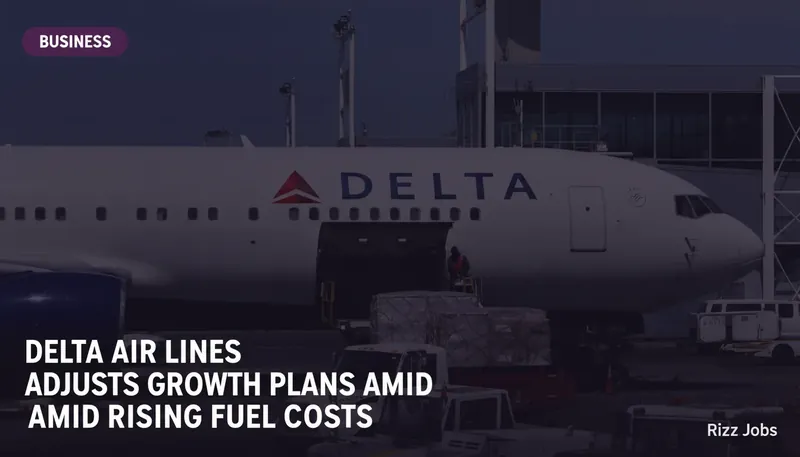
In a strategic shift prompted by escalating fuel prices, Delta Air Lines has announced the suspension of its planned capacity growth for the upcoming June quarter. The decision, unveiled on Wednesday, comes as the airline grapples with the financial strain imposed by soaring jet fuel costs, exacerbated by the ongoing geopolitical tensions in Iran. This move underscores the broader challenges faced by the global aviation industry, which is currently navigating a volatile economic landscape marked by fluctuating fuel prices and supply chain disruptions.
Delta's revised forecast projects a second-quarter profit that falls short of analysts' expectations, highlighting the pressure on margins as operational costs rise. The airline's shares, however, experienced an uptick, reflecting investor confidence in Delta's proactive approach to managing its cost structure. This development is particularly significant for Indian investors and business stakeholders who are closely monitoring the global aviation sector, given its implications for international travel and trade.
The airline industry, a crucial component of the global economy, is highly sensitive to fuel price volatility. For Delta, the decision to halt capacity expansion is a tactical response aimed at preserving financial stability while maintaining service quality. The airline's management is likely focusing on optimizing existing routes and enhancing operational efficiency to mitigate the impact of rising costs.
For Indian business readers, Delta's strategy offers insights into how major global players are adapting to economic pressures. It also serves as a reminder of the interconnectedness of global markets, where developments in one region can have ripple effects worldwide. As the situation evolves, stakeholders will be keen to see how Delta and other airlines navigate these challenges, potentially influencing investment decisions and market strategies in the aviation sector.


