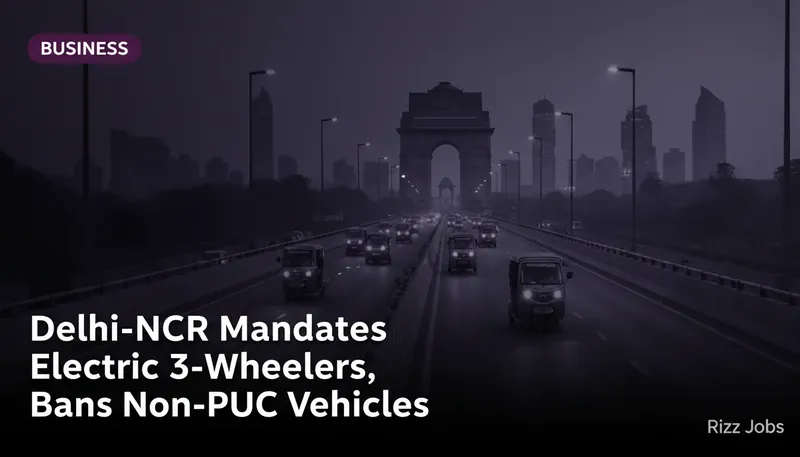
In a significant move towards sustainable urban mobility, the Delhi-NCR region is set to transition to an all-electric fleet of three-wheelers. Starting October, the region will enforce a ban on fuel-based three-wheelers, as well as vehicles lacking a valid Pollution Under Control (PUC) certificate. This policy is part of a broader initiative to combat the escalating pollution levels that have long plagued the National Capital Region. The decision is expected to catalyze the growth of the electric vehicle (EV) market in India, providing a much-needed boost to the EV infrastructure and manufacturing sectors.
Industry experts believe this move could accelerate the adoption of electric vehicles across other segments, as it sets a precedent for other metropolitan areas to follow suit. The ban on non-PUC vehicles underscores the government's commitment to enforcing stricter emission norms and promoting cleaner technologies. For investors, this shift opens up new avenues in the EV supply chain, from battery production to charging infrastructure, potentially driving significant investment inflows into these sectors.
Furthermore, the policy is likely to impact the livelihoods of thousands of drivers who rely on traditional fuel-powered three-wheelers. However, the government is expected to introduce transition schemes to facilitate the switch to electric vehicles, ensuring minimal disruption. As the region braces for this transformative change, stakeholders across the automotive and energy sectors are keenly observing the developments, which could redefine urban transport dynamics in India.


