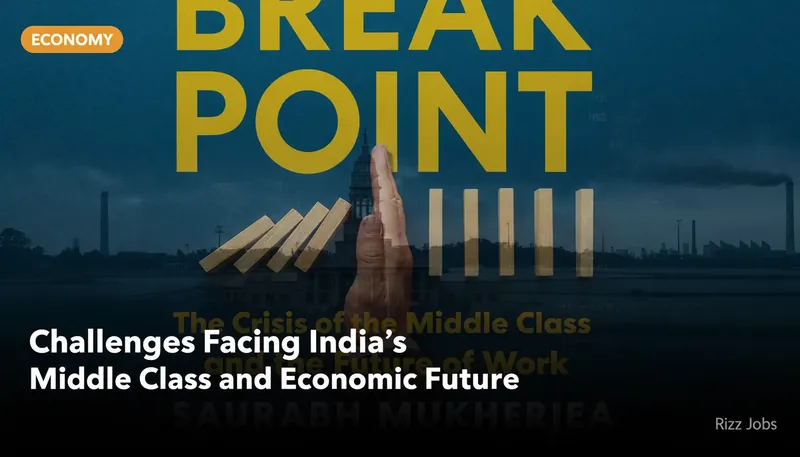
The Indian middle class, once the backbone of the country's economic growth, is facing unprecedented challenges that threaten its very existence. Traditionally, education was seen as a passport to prosperity, but this is no longer the case. The IT sector, a major employer of the middle class, is witnessing job cuts, and the promise of stable employment is fading. Wage growth is sluggish, failing to keep up with the escalating cost of living, which is putting immense pressure on household finances.
Furthermore, household debt is rising, often driven by consumption rather than investment, indicating a potential bubble that could have wider economic repercussions. The advent of artificial intelligence and automation is exacerbating the situation, as these technologies threaten to replace jobs across various sectors, including those once considered secure.
This slowdown in consumption, a key driver of economic growth, could have far-reaching implications for the Indian economy. The middle class, which has historically been a significant consumer base, is now constrained, leading to reduced demand across industries. This shift not only affects businesses but also has the potential to slow down GDP growth, impacting the broader economic landscape.
Politically, the middle class has limited influence, which complicates efforts to address these challenges through policy changes. Without significant intervention, the dream of upward mobility for millions of Indians could remain elusive, posing a risk to the country's long-term economic prospects.
For investors and business leaders, understanding these dynamics is crucial. The current environment calls for strategic adjustments, focusing on sectors less vulnerable to these changes and identifying opportunities in emerging industries that can offer sustainable growth. As the middle class navigates these turbulent times, the need for innovative solutions and policy reforms has never been more urgent.