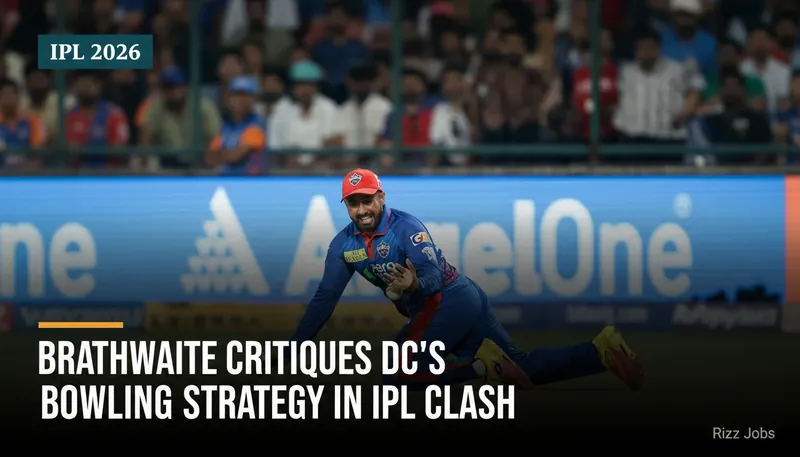
In a riveting encounter during the Indian Premier League (IPL), Carlos Brathwaite expressed his concerns over Delhi Capitals' (DC) bowling strategy against Punjab Kings (PBKS). PBKS managed a staggering 116 runs in the powerplay, significantly easing their chase with a required run-rate of just 10.50 per over after the initial six overs. Brathwaite, a former West Indies cricketer, highlighted the need for DC to adopt a more proactive approach with the ball, suggesting that early wickets could have altered the match's dynamics.
The match underscored the importance of strategic bowling, especially in the high-stakes environment of the IPL, where every over can shift the momentum. DC's inability to curb the run flow during the powerplay allowed PBKS to gain a firm grip on the match. This performance raises questions about DC's tactical acumen and their adaptability under pressure, crucial factors for any team aiming for the IPL title.
For investors and stakeholders in the IPL ecosystem, such performances have broader implications. Team strategies and player performances can influence brand value, sponsorship deals, and fan engagement, all of which are critical to the financial health of the franchises. The IPL, being a significant contributor to the sports economy in India, also impacts related industries such as advertising and merchandise sales.
As the tournament progresses, teams will need to reassess their strategies, especially in bowling, to ensure they remain competitive. The ability to adapt and implement effective game plans will be key to success in this year's IPL, potentially affecting the league's overall market dynamics and viewership ratings.