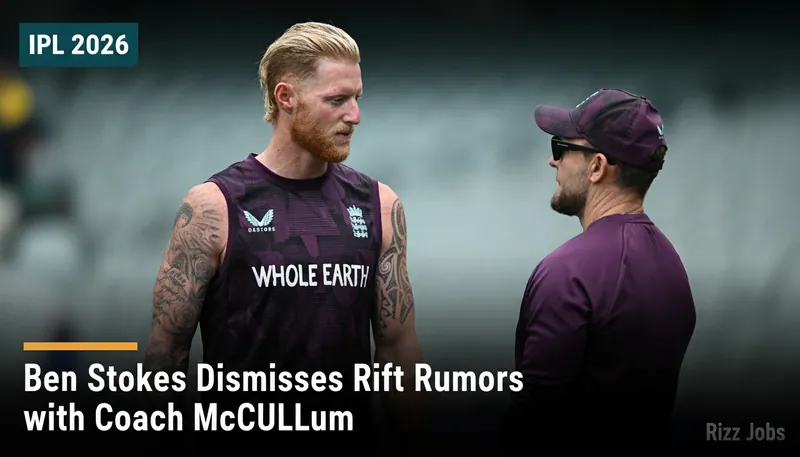
In a recent development that has captured the attention of cricket enthusiasts and stakeholders alike, England's cricket captain Ben Stokes has publicly addressed rumors of a potential rift with head coach Brendon McCullum. Utilizing the team's in-house media platform, Stokes broke his silence to reaffirm the strength of his partnership with McCullum, dismissing the speculations as a 'massive overstatement'. This statement comes at a crucial time as the cricket world gears up for the next season of the Indian Premier League (IPL), where player-coach dynamics can significantly impact team performance and, by extension, the commercial interests tied to the league.
Stokes, known for his leadership on and off the field, emphasized the collaborative approach he shares with McCullum, highlighting their shared vision for the team's future. This public declaration aims to quash any lingering doubts among fans and investors about the team's internal harmony. The timing of this announcement is particularly pertinent as franchises and sponsors are keenly observing team dynamics ahead of the IPL auction and the upcoming season.
The IPL, a major revenue generator in the cricketing world, not only affects the players and teams but also has broader implications for advertisers, broadcasters, and investors. The assurance of a stable leadership within the England team could enhance the marketability of players like Stokes, who are pivotal figures in the league. For Indian investors and businesses, this stability translates into potential opportunities for sponsorships and partnerships, capitalizing on the heightened visibility and engagement that the IPL offers.
As the IPL continues to grow in stature, the narratives surrounding its players and coaches become crucial elements that influence market dynamics. Stokes' recent comments are a reminder of the intricate relationship between sports performance and business interests, underscoring the importance of maintaining a positive public image. This development is a testament to the evolving nature of sports management, where communication and perception management are as vital as on-field performance.