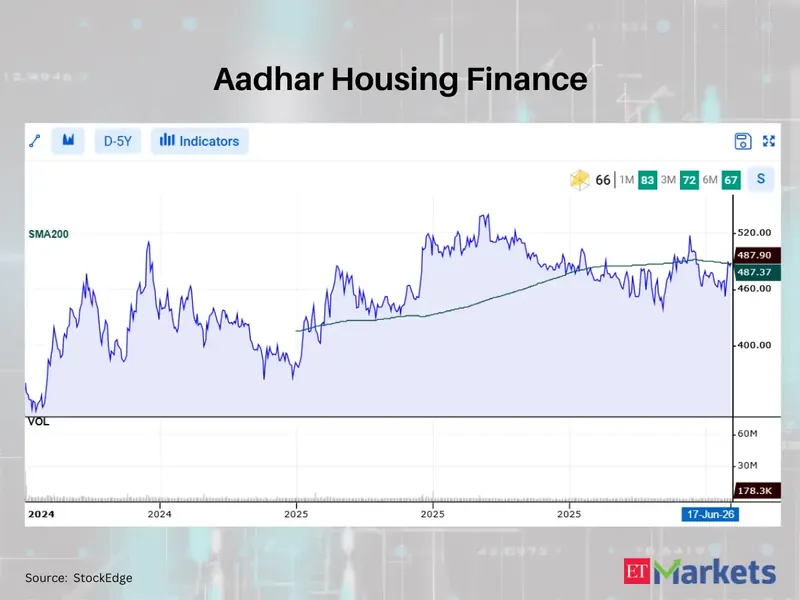
On June 17, 2026, a significant development occurred in the Nifty500 pack as 14 stocks closed above their 200-day moving averages, according to data from stockedge.com. This technical indicator is crucial for traders to assess the overall trend of a stock, with prices above the 200-day SMA generally indicating an uptrend.
The 200-day daily moving average (DMA) is a widely used tool among traders and analysts to determine the long-term trend of a stock. When a stock's price crosses above this average, it is often seen as a positive signal, suggesting potential upward momentum. The recent crossing of 14 stocks above their 200 DMAs highlights a positive trend in the market.
Traders and investors closely monitor the 200-day DMA as it helps in identifying the overall market sentiment. Stocks trading above this average are typically considered to be in a bullish phase, attracting more investor interest. This recent movement in the Nifty500 pack could signal a broader market uptrend.
The data from stockedge.com provides a comprehensive view of the technical landscape, allowing market participants to make informed decisions. The crossing of the 200-day moving average by multiple stocks simultaneously can often lead to increased trading volumes and heightened investor activity.
The significance of the 200-day DMA lies in its ability to filter out short-term market noise and provide a clearer picture of a stock's long-term trajectory. As these 14 stocks move above this critical threshold, it may prompt further analysis and strategic adjustments by traders.
Background
The 200-day moving average is a critical tool for traders and investors, often used to gauge the long-term trend of a stock. Historically, stocks that maintain prices above this average are seen as having strong upward momentum, which can influence market sentiment and trading strategies.
This development in the Nifty500 pack could have broader implications for market trends, potentially influencing investor sentiment and trading strategies in the coming weeks.