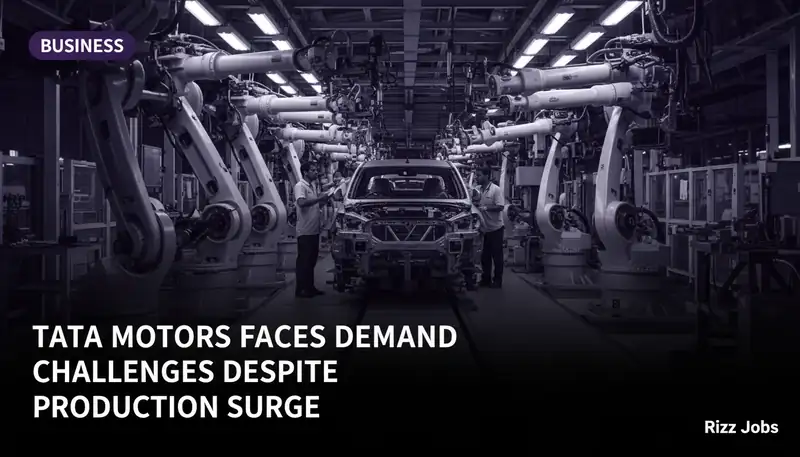
Tata Motors, one of India's leading automobile manufacturers, is experiencing a paradoxical situation. While the company has successfully ramped up its production capabilities to meet anticipated market demand, a recent analysis by Morgan Stanley indicates that the demand from consumers is not matching this increased output. This mismatch poses a potential risk to Tata Motors' profit margins, as the gap between robust factory output and sluggish retail sales could lead to an oversupply in the market.
Morgan Stanley has maintained its 'equal-weight' rating on Tata Motors, reflecting a cautious outlook on the company's performance. The brokerage firm highlights that while production efficiency has improved, the lack of corresponding retail demand could pressure the company's financials. This situation underscores a broader concern within the automotive industry, where supply chain improvements and production scalability are not always aligned with consumer purchasing behavior.
The Indian automotive sector has been navigating a complex landscape marked by fluctuating demand patterns, evolving consumer preferences, and regulatory changes. Tata Motors' current predicament is emblematic of these challenges. The company's ability to produce more vehicles is undoubtedly a positive development, but the real test lies in converting this production capacity into actual sales.
For investors and stakeholders, the key takeaway is the importance of aligning production strategies with market realities. Tata Motors' experience serves as a reminder that production capabilities, while crucial, must be complemented by effective demand generation strategies. This may include targeted marketing efforts, competitive pricing strategies, and innovative financing options to stimulate consumer interest.
As the automotive industry continues to evolve, companies like Tata Motors must remain agile and responsive to market signals. The coming months will be critical for Tata Motors as it seeks to bridge the gap between production and sales, ensuring that its enhanced manufacturing capabilities translate into sustainable growth and profitability.


