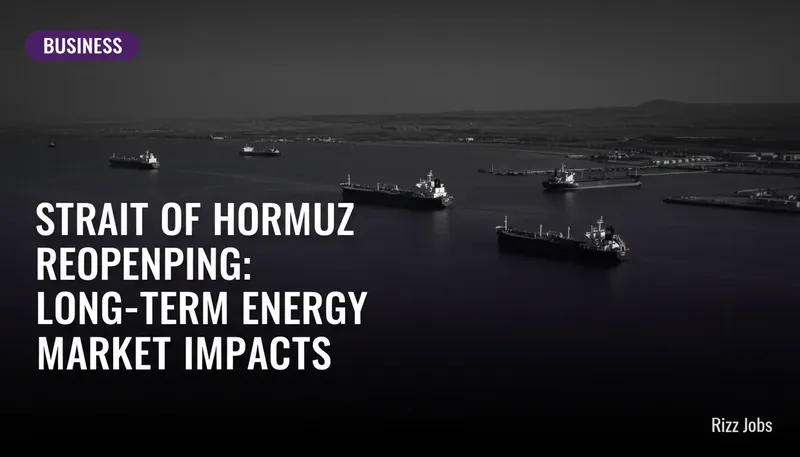
The Strait of Hormuz, a vital artery for global oil shipments, has long been a focal point for geopolitical tensions. Recent developments suggest that even if the strait reopens, the energy markets may not stabilize immediately. This narrow waterway, through which nearly a fifth of the world's oil passes, is crucial for both global and Indian energy security. Any disruption here can send ripples across the global economy, affecting oil prices and, consequently, inflation rates.
The reopening of the Strait of Hormuz might initially seem like a relief for energy markets. However, underlying geopolitical tensions, such as those involving Iran and neighboring countries, continue to pose risks. Indian investors should be aware that while the immediate threat of supply disruption might be mitigated, the volatility in oil prices could persist. This is due to potential retaliatory actions or renewed tensions that could arise at any moment.
For India, which imports a significant portion of its crude oil, the stability of the Strait of Hormuz is of paramount importance. Fluctuating oil prices can have a cascading effect on the Indian economy, influencing everything from transportation costs to the prices of essential goods. Businesses reliant on stable energy prices may face challenges in forecasting costs and managing supply chains.
Moreover, the global energy transition towards renewable sources adds another layer of complexity. As nations strive to reduce their carbon footprints, the reliance on oil from the Middle East may gradually decrease. However, this transition is not immediate, and the current infrastructure still heavily depends on oil imports, making the situation precarious.
In conclusion, while the reopening of the Strait of Hormuz is a positive development, it does not eliminate the underlying risks that could affect energy markets in the long term. Indian investors and businesses should remain vigilant and consider diversifying their energy sources to mitigate potential disruptions.


