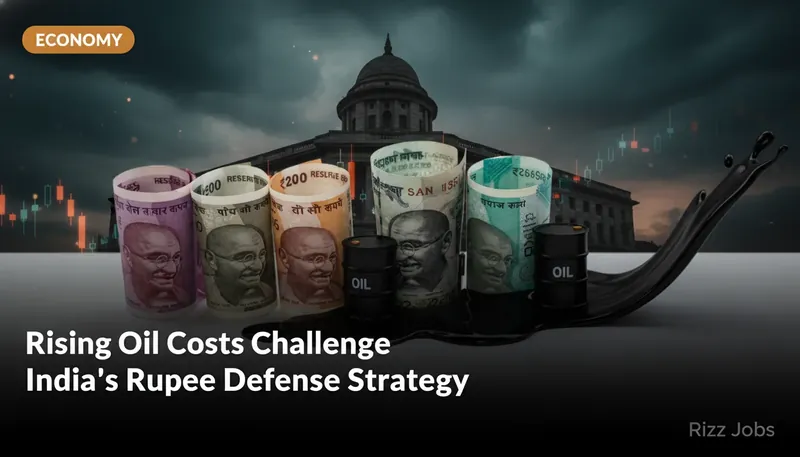
India's escalating oil import bill is putting significant pressure on the country's current account deficit, highlighting the limitations of the Reserve Bank of India's (RBI) strategies to stabilize the rupee. The recent geopolitical tensions in Iran have further strained the situation, as they threaten to disrupt oil supplies and elevate prices, thereby increasing India's import costs. This scenario is exacerbated by the country's dependence on crude oil imports, which constitute a substantial portion of its foreign exchange expenditure.
The RBI has been actively employing various measures to defend the rupee, such as intervening in the forex market and utilizing foreign exchange reserves. However, these efforts provide only temporary relief. The persistent rise in oil prices could lead to a significant widening of the current account deficit, which economists warn might result in a balance of payments deficit for the second consecutive year.
For Indian investors and businesses, this situation poses a dual challenge. On one hand, the depreciating rupee makes imports more expensive, affecting industries reliant on foreign goods and services. On the other hand, it could lead to inflationary pressures, impacting consumer purchasing power and overall economic growth.
The government and the RBI may need to explore more sustainable solutions to mitigate these economic pressures. Strategies could include diversifying energy sources, enhancing domestic oil production, and encouraging energy efficiency across industries. Additionally, strengthening bilateral trade agreements with oil-producing nations could provide some relief.
In the meantime, Indian businesses must brace for potential volatility in the forex market and prepare for the implications of a weaker rupee. Investors should remain vigilant and consider hedging strategies to protect their portfolios against currency risks. As the global economic landscape remains uncertain, India's resilience will be tested in its ability to navigate these complex challenges.