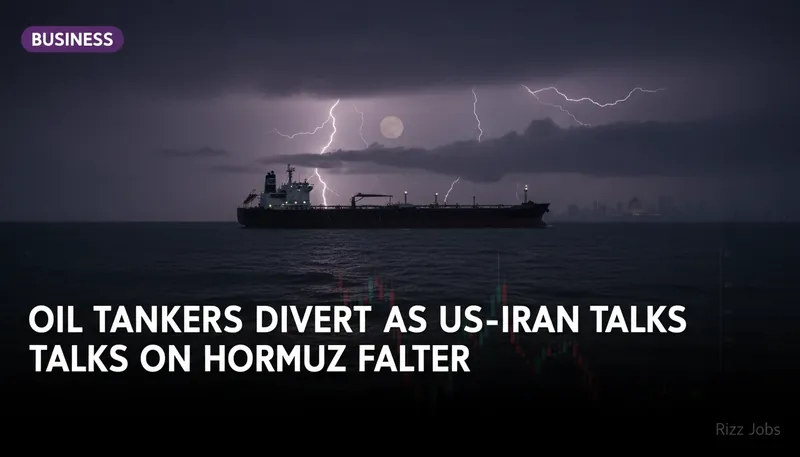
In a significant development impacting global energy markets, oil tankers have been forced to reroute from the Strait of Hormuz following a breakdown in negotiations between the United States and Iran. The strategic waterway, which is pivotal for the passage of approximately 20% of the world's oil, has once again become a focal point of geopolitical tension. Over the weekend, high-stakes discussions aimed at reopening the strait were held, but they ended without a resolution, leaving the international community on edge.
The failure of these talks underscores the fragility of diplomatic efforts in the region, with potential repercussions for global oil prices and supply chains. The Strait of Hormuz is not just a critical chokepoint for oil transportation but also a barometer for geopolitical stability in the Middle East. As tankers make a U-turn, the immediate concern for global markets is the potential spike in oil prices, which could ripple through the Indian economy, affecting everything from inflation rates to the cost of living.
For Indian investors and businesses, the situation demands careful monitoring. India's reliance on oil imports means that any disruption in supply or increase in prices could have significant economic implications. Companies in sectors such as aviation, logistics, and manufacturing, which are heavily dependent on oil, may face increased operational costs. Additionally, the Indian government might need to reassess its energy strategy and consider diversifying its oil import sources to mitigate risks associated with Middle Eastern geopolitics.
As the world watches the unfolding situation, the emphasis will be on diplomatic maneuvers that could potentially de-escalate tensions. However, the current impasse highlights the need for India to bolster its energy security measures and explore alternative energy sources to reduce its vulnerability to such geopolitical shocks.


