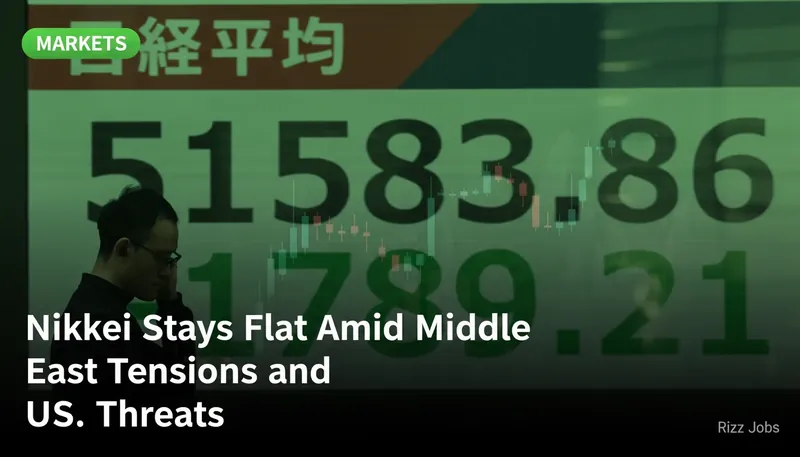
In a day marked by volatility, Japan's Nikkei index concluded trading on a flat note as global investors grappled with the geopolitical tensions in the Middle East and the potential economic ramifications. The markets were caught in a tug-of-war between optimism for a ceasefire in the Middle East and the looming threat from U.S. President Donald Trump to intensify military actions against Iran if it doesn't comply with reopening the Strait of Hormuz. This strategic waterway is crucial for global oil shipments, and any disruption could send shockwaves through global oil markets, affecting prices and economic stability.
The Nikkei's performance reflects the broader uncertainty that has gripped global markets. Investors are wary of the potential for escalating conflict, which could lead to increased volatility in energy prices and impact global trade routes. For Indian investors, this situation underscores the importance of monitoring geopolitical developments as they can have significant implications for oil prices, inflation, and the broader economic environment.
While the immediate impact on the Nikkei was neutral, the underlying concerns about geopolitical stability and energy security remain potent. Indian businesses and investors should be prepared for potential fluctuations in oil prices, which could affect sectors ranging from transportation to manufacturing. Additionally, the situation highlights the interconnected nature of global markets, where regional conflicts can have far-reaching consequences.
As the situation unfolds, market participants will be keenly observing any diplomatic developments or policy announcements from major global powers. The outcome could set the tone for market movements in the coming weeks, making it essential for investors to stay informed and agile in their investment strategies.