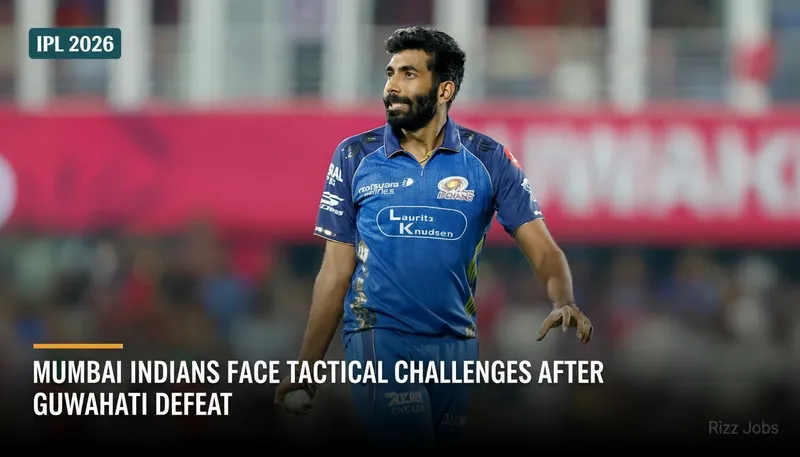
In a recent Indian Premier League (IPL) match, the Mumbai Indians faced a significant setback against the Rajasthan Royals in Guwahati. The match saw young talents Yashasvi Jaiswal and Vaibhav Sooryavanshi deliver stellar performances, putting the Mumbai Indians on the back foot. Mumbai's head coach, Mahela Jayawardene, candidly admitted that the team struggled with their bowling accuracy, missing crucial lengths and lines. This performance has raised concerns among fans and analysts alike, as it highlights potential vulnerabilities in the Mumbai Indians' strategy.
The match was a showcase of aggressive batting from the Rajasthan Royals, with Jaiswal and Sooryavanshi capitalizing on every opportunity. For the Mumbai Indians, this defeat serves as a wake-up call to reassess their game plan and address the inconsistencies in their bowling attack. The pressure is mounting on star bowler Jasprit Bumrah, who is known for his precision and control. However, even he seemed to be affected by the pressure, as the team failed to contain the Royals' onslaught.
From an investor's perspective, the IPL is more than just a cricket tournament; it's a significant business venture with substantial financial implications. Teams like the Mumbai Indians, owned by Reliance Industries, are not only competing for trophies but also for brand value and market share. The performance of such teams can influence merchandise sales, sponsorship deals, and overall brand equity. As the IPL progresses, stakeholders will be keenly observing how the Mumbai Indians bounce back from this defeat and what strategic changes they implement to regain their competitive edge.