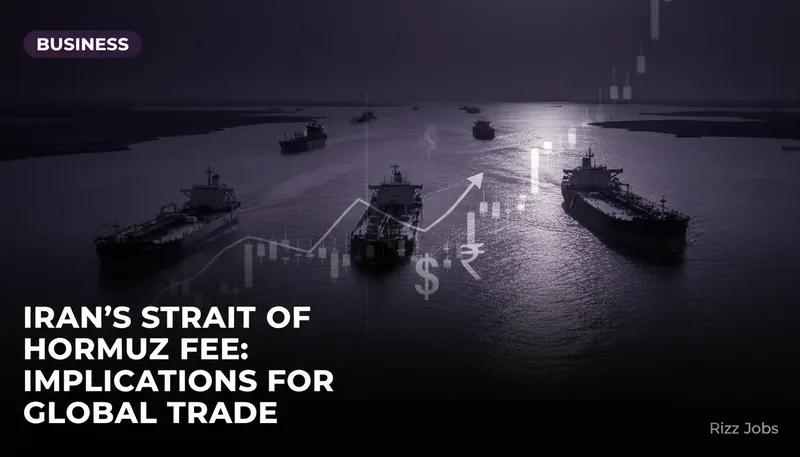
In a strategic move that could have significant ramifications for global trade, Iran is reportedly considering imposing fees on vessels passing through the Strait of Hormuz, one of the world's most critical maritime chokepoints. According to reports, ships that pay the proposed fees will receive priority passage, while those that do not may face delays. This development comes at a time when geopolitical tensions in the region are already high, and the potential for economic disruption is considerable.
The Strait of Hormuz is a vital artery for the global oil supply, with about a fifth of the world's oil passing through its narrow waters. Any disruption in the flow of oil could lead to increased shipping costs and higher oil prices, impacting economies worldwide, including India, which is heavily reliant on oil imports. The proposed fees could also affect shipping companies' operational costs, leading to potential increases in the prices of goods transported through this route.
For Indian businesses and investors, this move by Iran could mean a reevaluation of supply chain strategies, especially for industries dependent on oil and gas imports. Companies may need to consider alternative routes or sources, which could affect their bottom lines. Additionally, the geopolitical implications could influence India's foreign policy and trade relations in the region.
The decision to monetize the Strait of Hormuz could also serve as a precedent for other countries controlling strategic maritime passages, potentially leading to a new norm in international trade. As the situation develops, stakeholders in the shipping and oil industries, as well as policymakers, will need to closely monitor the impacts of this policy shift on global trade dynamics.


