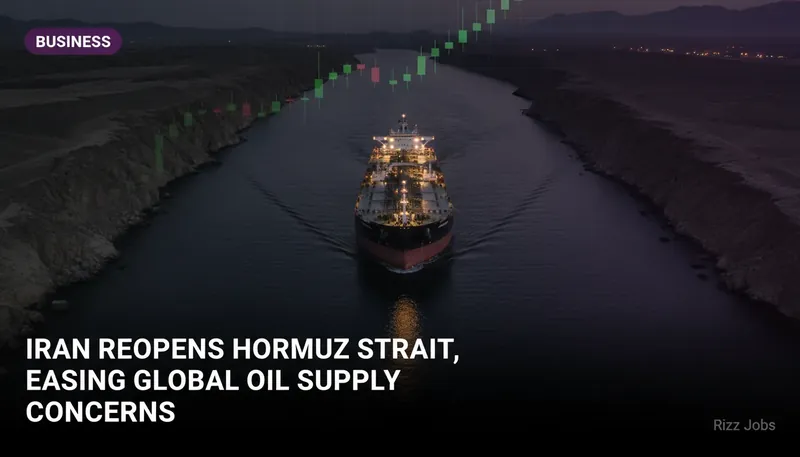
In a significant development for global energy markets, Iran has announced the complete reopening of the Strait of Hormuz, a critical maritime chokepoint that facilitates the transit of approximately 20% of the world's oil and gas supplies. This move comes after a six-week period during which the flow of energy resources through the strait was severely restricted, causing ripples across international markets and raising concerns about potential supply shortages.
The Strait of Hormuz, nestled between the Persian Gulf and the Gulf of Oman, is a strategic artery for the global energy trade. Any disruption in this narrow passage can have far-reaching implications, not only for oil prices but also for the broader economic landscape. The recent closure had led to increased volatility in energy markets, with traders and analysts closely monitoring developments in the region.
For India, which imports a significant portion of its oil needs, the reopening of the strait is a welcome relief. The country has been grappling with inflationary pressures, partly driven by fluctuating oil prices. A stable and predictable supply of oil is crucial for India's economic stability and growth prospects. Additionally, Indian companies engaged in the oil and gas sector can now resume their operations with greater certainty, potentially leading to improved corporate earnings and investor confidence.
The geopolitical dynamics surrounding the Strait of Hormuz have always been complex, with tensions often flaring between regional powers. However, Iran's decision to keep the strait open, at least for the remaining ceasefire period, signals a temporary easing of hostilities. This development could pave the way for diplomatic engagements aimed at ensuring long-term stability in the region.
As the global economy continues to recover from the impacts of the COVID-19 pandemic, the reopening of the Strait of Hormuz is a timely development. It underscores the interconnectedness of global supply chains and the importance of maintaining open and secure trade routes. Investors and businesses worldwide will be keenly observing how this situation unfolds, with an eye on potential opportunities and risks in the energy sector.


