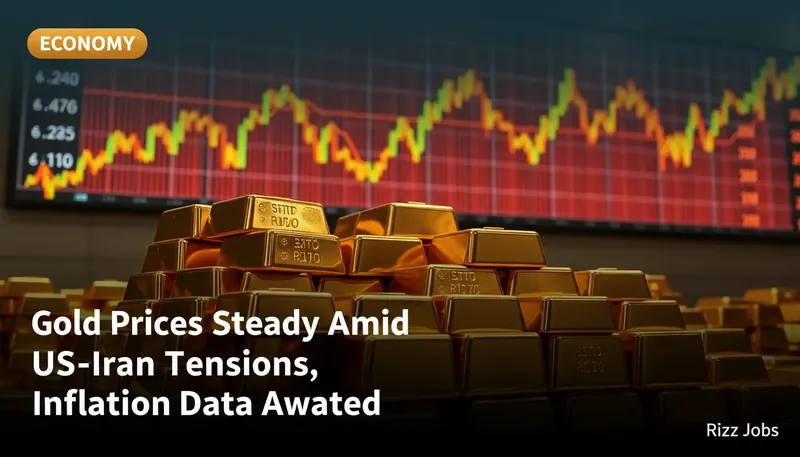
Gold prices have shown remarkable stability as global markets remain on edge, with investors closely monitoring developments in US-Iran ceasefire discussions and awaiting critical US inflation data. The recent announcement of a potential ceasefire by the United States has not fully alleviated concerns over escalating regional tensions, which continue to exert pressure on inflation expectations and influence monetary policy outlooks. For Indian investors, the gold market's performance is particularly significant, given the metal's traditional role as a safe-haven asset during times of geopolitical instability.
The anticipation of US inflation data is pivotal, as it will provide further insights into the Federal Reserve's future interest rate decisions. A higher-than-expected inflation figure could dampen hopes for rate cuts, potentially leading to increased demand for gold as a hedge against inflation. In contrast, a lower inflation reading might ease pressure on the Fed, allowing for a more accommodative monetary stance, which could impact gold prices negatively.
Analysts are cautiously optimistic about gold's potential to rebound, citing ongoing geopolitical risks and market volatility. The Indian market, which is heavily influenced by global gold price movements, may see increased investor interest in gold as a diversification strategy amidst uncertain economic conditions. Meanwhile, other precious metals have experienced mixed movements, reflecting varied investor sentiment across different segments of the commodities market.
As the situation unfolds, investors are advised to stay informed and consider the broader economic implications of these geopolitical developments. The interplay between geopolitical tensions, inflation expectations, and central bank policies will be crucial in determining the trajectory of gold prices in the coming weeks.