In a spectacular display of football prowess, Erling Haaland led Manchester City to a commanding 4-0 victory over Liverpool in the FA Cup 2026. The Norwegian striker's hat-trick not only cemented his status as one of the most formidable forwards in the game but also underscored Manchester City's dominance in English football. This victory is more than just a sporting triumph; it reflects the strategic investments and managerial acumen that have transformed Manchester City into a powerhouse. For Indian investors and business leaders, the match offers insights into how strategic planning and talent acquisition can yield significant returns. The club's success is a testament to the importance of nurturing talent and making calculated investments, principles that are equally applicable in the business world. As football clubs increasingly become global brands, their financial health and performance can impact various sectors, including sports merchandising, media rights, and sponsorship deals. The ripple effects of such victories extend beyond the pitch, influencing market dynamics and consumer behavior. In the context of the Indian market, where football is gaining popularity, this match could spur increased interest in football-related investments and partnerships. With the Indian Super League growing and attracting international attention, stakeholders might find opportunities to capitalize on the sport's expanding footprint. As Manchester City continues to set benchmarks, it serves as a case study for Indian businesses aiming to achieve global competitiveness through strategic foresight and investment in human capital.
business
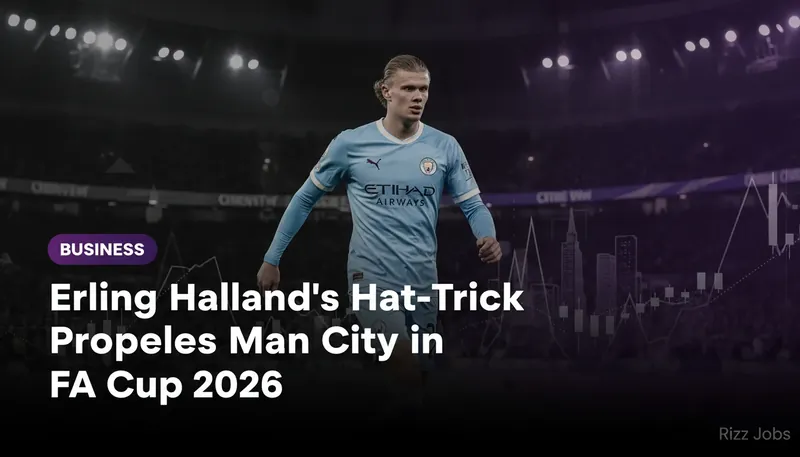
Erling Haaland's Hat-Trick Propels Man City in FA Cup 2026
Rizz Jobs News Desk··2 min read
Market Briefing
- Erling Haaland's hat-trick led Manchester City to a 4-0 win over Liverpool in the FA Cup 2026.
- The match highlights strategic investments in sports and their business implications.
Share this story
Topics
Erling HaalandManchester CityFA Cup 2026football investmentssports business
Stay Informed
India's financial news, delivered daily.
Finance, markets, economy and startup updates — straight to your inbox.
Subscribe Free →

